International Returns for Shopify
International returns for Shopify stores hinge on duties, return shipping, and consolidation hubs - without losing $40 per package.
Hylke Reitsma is co-founder of Forthsuite and a supply chain specialist with 8+ years of hands-on experience at Shell, Verisure, and Stryker. He holds an MSc in Supply Chain Management from the University of Groningen and writes practical guides to help e-commerce teams run leaner, faster supply chains. Selected by Replit as 1 of 20 founders for the inaugural Race to Revenue Cohort #1 (2026) and certified as a Replit Platform Builder.
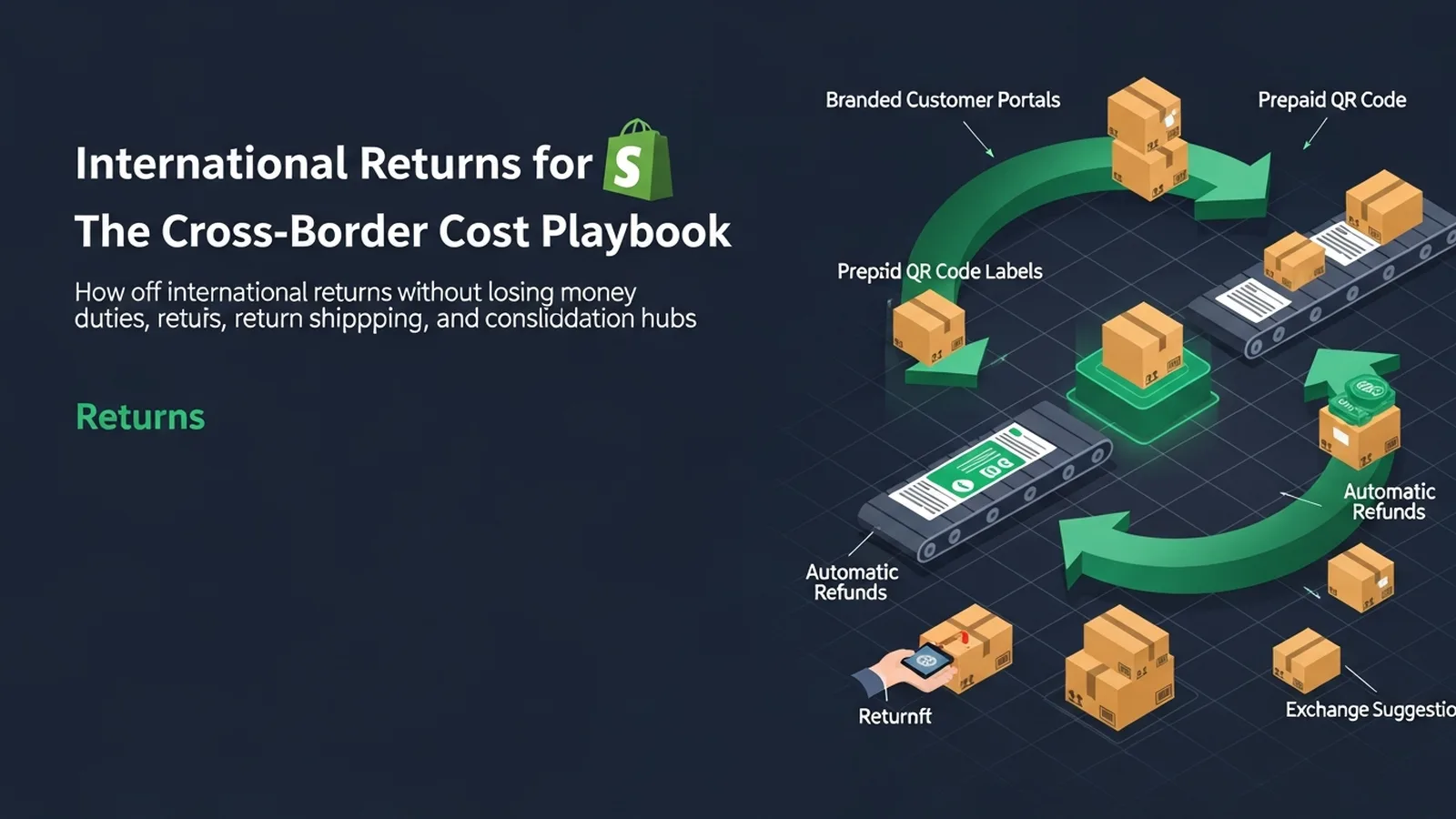
International Returns for Shopify: The Cross-Border Cost Playbook
TL;DR: To manage international returns cost-effectively on Shopify, use regional consolidation hubs, negotiate carrier return rates, and implement duty drawback processes to avoid losing $40+ per package. Forthroute gives Shopify brands a branded returns portal and can buy prepaid labels on eligible domestic and cross-border routes; coverage depends on the shopper origin and warehouse destination, so confirm your specific route with support.
Last updated: July 2026
TL;DR. Duties, return shipping, and consolidation hubs — how to offer international returns without losing $40 per package.
If you operate returns at scale on Shopify, this guide is one of 25 spokes inside the Shopify Returns Management Hub — start with the pillar for the operator-level overview, then come back here for the deep dive on international returns shopify. The short answer to "How do I handle international returns for a Shopify store?": work the framework below, ship the policy wording, and instrument the metric we call out at the end.
Why international returns are 4x costlier
Why international returns are 4x costlier is a load-bearing step. The Forthroute team works with Shopify brands on returns, and this is the version of the playbook that survives contact with peak season.
Use the rule set below as your default and adjust the thresholds for your category and AOV.
- Define the input you actually have (Shopify order data, return reason, customer cohort).
- Pick a default rule that handles 70% of cases without human review.
- Write the customer-facing wording before you write the rule — the wording is the product.
- Instrument the conversion (refund-to-exchange, repeat-return rate, refund cycle time).
Duty drawback options
Duty drawback options is a load-bearing step. The Forthroute team works with Shopify brands on returns, and this is the version of the playbook that survives contact with peak season.
Use the rule set below as your default and adjust the thresholds for your category and AOV.
- Define the input you actually have (Shopify order data, return reason, customer cohort).
- Pick a default rule that handles 70% of cases without human review.
- Write the customer-facing wording before you write the rule — the wording is the product.
- Instrument the conversion (refund-to-exchange, repeat-return rate, refund cycle time).
Regional consolidation hubs
Regional consolidation hubs is a load-bearing step. The Forthroute team works with Shopify brands on returns, and this is the version of the playbook that survives contact with peak season.
Use the rule set below as your default and adjust the thresholds for your category and AOV.
- Define the input you actually have (Shopify order data, return reason, customer cohort).
- Pick a default rule that handles 70% of cases without human review.
- Write the customer-facing wording before you write the rule — the wording is the product.
- Instrument the conversion (refund-to-exchange, repeat-return rate, refund cycle time).
When to refuse the return
When to refuse the return is a load-bearing step. The Forthroute team works with Shopify brands on returns, and this is the version of the playbook that survives contact with peak season.
Use the rule set below as your default and adjust the thresholds for your category and AOV.
- Define the input you actually have (Shopify order data, return reason, customer cohort).
- Pick a default rule that handles 70% of cases without human review.
- Write the customer-facing wording before you write the rule — the wording is the product.
- Instrument the conversion (refund-to-exchange, repeat-return rate, refund cycle time).
Country-by-country quick guide
Country-by-country quick guide is a load-bearing step. The Forthroute team works with Shopify brands on returns, and this is the version of the playbook that survives contact with peak season.
Use the rule set below as your default and adjust the thresholds for your category and AOV.
- Define the input you actually have (Shopify order data, return reason, customer cohort).
- Pick a default rule that handles 70% of cases without human review.
- Write the customer-facing wording before you write the rule — the wording is the product.
- Instrument the conversion (refund-to-exchange, repeat-return rate, refund cycle time).
FAQ
How do I handle international returns for a Shopify store?
Yes — and the framework above gives you the operator answer in under 700 words. Duties, return shipping, and consolidation hubs — how to offer international returns without losing $40 per package.
How does this affect refund cycle time on Shopify?
Most operators see refund cycle time drop from 7-9 days to 3-5 days once the rules above are in place. The biggest single lever is auto-approval for low-risk, low-value returns.
Does Forthroute support international returns shopify natively?
Yes. Forthroute ships with the rule engine, customer portal, and Shopify-native integration the framework above assumes. Pricing is free — see pricing.
Where does this fit in the broader Returns Management Hub?
This spoke is one of 25 inside the Shopify Returns Management Hub. The pillar covers the full operator overview; come back to this spoke when you specifically need to solve international returns shopify.
Do I have to offer international returns? No, but declining them hurts trust and repeat purchase rates. Most successful Shopify brands offer them, even if the terms are stricter (longer windows, exchange-only, or no refund for duties paid). Your return policy should spell this out clearly at checkout, so there's no surprise.
What's the difference between a consolidation hub and a fulfillment center? A consolidation hub is purely for reverse logistics—receiving returns, inspecting, and sorting them. A fulfillment center handles both forward (outbound) and reverse (inbound) logistics. For international returns, a hub is often cheaper because it does less. You consolidate returns from multiple countries, then ship in bulk to your main warehouse or disposal partner.
Should I use the customer's original carrier for returns? Not always. If a US customer ordered via DHL and returns to the UK, DHL's reverse rate may be expensive. Instead, use a carrier negotiated for returns in that region. Your portal should show available carriers and let the customer choose, with clear labeling of who pays.
What about items damaged in transit back to me? Document condition at the consolidation hub with photos. If damage is obvious and not the customer's fault, you can deny the refund and re-ship a replacement, or offer a partial refund. Always disclose this policy upfront so disputes don't arise mid-return.
Run Shopify returns in a branded portal you control — Forthroute, no subscription or monthly return limit.
About the Author

Hylke Reitsma is co-founder of Forthsuite and a supply chain specialist with 8+ years of hands-on experience at Shell, Verisure, and Stryker. He holds an MSc in Supply Chain Management from the University of Groningen and writes practical guides to help e-commerce teams run leaner, faster supply chains. Selected by Replit as 1 of 20 founders for the inaugural Race to Revenue Cohort #1 (2026) and certified as a Replit Platform Builder.
LinkedIn