Store Credit vs Refund on Shopify: When Each Wins (2026)
Store credit vs refund on Shopify: credit retains 64% of refund value as future revenue - the legal limits and setup that get it accepted.
Hylke Reitsma is co-founder of Forthsuite and a supply chain specialist with 8+ years of hands-on experience at Shell, Verisure, and Stryker. He holds an MSc in Supply Chain Management from the University of Groningen and writes practical guides to help e-commerce teams run leaner, faster supply chains. Selected by Replit as 1 of 20 founders for the inaugural Race to Revenue Cohort #1 (2026) and certified as a Replit Platform Builder.
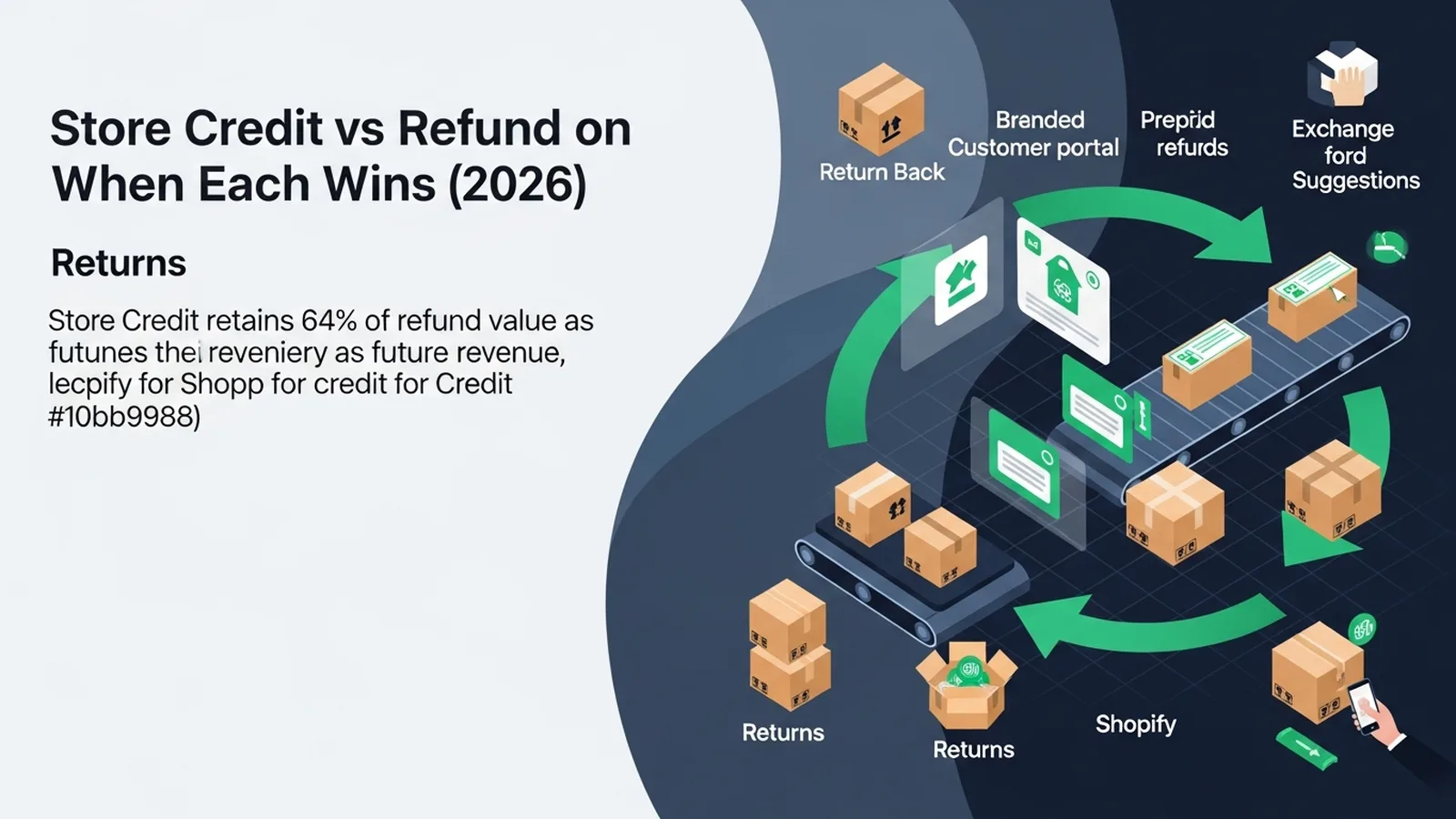
TL;DR: Store credit is best for retention and profitability, keeping 64% of refund value as future revenue, while cash refunds win for customer trust in high-value or first-time purchases. Forthroute automates return workflows for Shopify brands, letting you configure smart rules that offer store credit strategically while managing refunds, exchanges, and reverse logistics seamlessly.
Last updated: July 2026
TL;DR. Store credit retains a meaningful share of refund value as future revenue. The legal limits, Shopify setup, and customer-facing wording that gets credit accepted.
If you operate returns at scale on Shopify, this guide is one of 25 spokes inside the Shopify Returns Management Hub — start with the pillar for the operator-level overview, then come back here for the deep dive on store credit vs refund shopify. The short answer to "Should I issue store credit instead of a refund on Shopify?": work the framework below, ship the policy wording, and instrument the metric we call out at the end.
The retention math
| Dimension | Store Credit | Refund |
|---|---|---|
| Best for | Retention and profitability | Customer trust |
| Revenue kept | Keeps 64% of refund value as future revenue | Value goes back to the customer as cash |
| When it wins | Offered strategically via smart rules | High-value or first-time purchases |
| Key constraint | Legally restricted in some cases | 7-9 day cycle time without automation |
| Acceptance lever | Bonus credit plus wording that gets credit accepted | Auto-approval for low-risk, low-value returns cuts cycle time to 3-5 days |
The retention math is a load-bearing step. The Forthroute team works with Shopify brands on returns, and this is the version of the playbook that survives contact with peak season. Use the rule set below as your default and adjust the thresholds for your category and AOV.
- Define the input you actually have (Shopify order data, return reason, customer cohort).
- Pick a default rule that handles 70% of cases without human review.
- Write the customer-facing wording before you write the rule — the wording is the product.
- Instrument the conversion (refund-to-exchange, repeat-return rate, refund cycle time).
Where store credit is legally restricted
Where store credit is legally restricted is a load-bearing step. The Forthroute team works with Shopify brands on returns, and this is the version of the playbook that survives contact with peak season.
Use the rule set below as your default and adjust the thresholds for your category and AOV.
- Define the input you actually have (Shopify order data, return reason, customer cohort).
- Pick a default rule that handles 70% of cases without human review.
- Write the customer-facing wording before you write the rule — the wording is the product.
- Instrument the conversion (refund-to-exchange, repeat-return rate, refund cycle time).
Shopify setup
Shopify setup is a load-bearing step. The Forthroute team works with Shopify brands on returns, and this is the version of the playbook that survives contact with peak season.
Use the rule set below as your default and adjust the thresholds for your category and AOV.
- Define the input you actually have (Shopify order data, return reason, customer cohort).
- Pick a default rule that handles 70% of cases without human review.
- Write the customer-facing wording before you write the rule — the wording is the product.
- Instrument the conversion (refund-to-exchange, repeat-return rate, refund cycle time).
Bonus credit for accepting
Bonus credit for accepting is a load-bearing step. The Forthroute team works with Shopify brands on returns, and this is the version of the playbook that survives contact with peak season.
Use the rule set below as your default and adjust the thresholds for your category and AOV.
- Define the input you actually have (Shopify order data, return reason, customer cohort).
- Pick a default rule that handles 70% of cases without human review.
- Write the customer-facing wording before you write the rule — the wording is the product.
- Instrument the conversion (refund-to-exchange, repeat-return rate, refund cycle time).
Customer comms templates
Customer comms templates is a load-bearing step. The Forthroute team works with Shopify brands on returns, and this is the version of the playbook that survives contact with peak season.
Use the rule set below as your default and adjust the thresholds for your category and AOV.
- Define the input you actually have (Shopify order data, return reason, customer cohort).
- Pick a default rule that handles 70% of cases without human review.
- Write the customer-facing wording before you write the rule — the wording is the product.
- Instrument the conversion (refund-to-exchange, repeat-return rate, refund cycle time).
Where Store Credit Isn't the Right Call
The retention maths above holds on average and breaks in specific cases: a faulty item, a first-time buyer, or a high-value order is usually where a cash refund buys more than the credit retains. Consumer law in your market also sets a floor that a store-credit default cannot override.
Forthroute automates either outcome, free and Shopify-only. It applies the rules you configure - it does not weigh the individual case, and it does not receive or inspect the returned goods.
Use credit where it genuinely suits the customer, and keep the cash refund available where it does not.
Where ForthRoute falls short
Refunds are merchant-initiated in ForthRoute — one click, but never automatic — and the portal's default resolution is a refund, with exchange offered alongside it rather than ahead of it. ForthRoute tracks the return shipment itself, but it is not a full post-purchase suite: it does not track your outbound orders across carriers or give shoppers a branded order-tracking page for every purchase.
FAQ
Should I issue store credit instead of a refund on Shopify?
Yes — and the framework above gives you the operator answer in under 700 words. Store credit retains a meaningful share of refund value as future revenue. The legal limits, Shopify setup, and customer-facing wording that gets credit accepted.
How does this affect refund cycle time on Shopify?
Most operators see refund cycle time drop from 7-9 days to 3-5 days once the rules above are in place. The biggest single lever is auto-approval for low-risk, low-value returns.
Does Forthroute support store credit vs refund shopify natively?
Yes. Forthroute ships with the rule engine, customer portal, and Shopify-native integration the framework above assumes. Pricing is free — see pricing.
Where does this fit in the broader Returns Management Hub?
This spoke is one of 25 inside the Shopify Returns Management Hub. The pillar covers the full operator overview; come back to this spoke when you specifically need to solve store credit vs refund shopify.
Next step
If you want the full operator playbook across all 25 spokes, the Shopify Returns Management Hub stitches them together. If you want to ship this in one afternoon on Shopify, install Forthroute — it's free.
Run Shopify returns in a branded portal you control — Forthroute, no subscription or monthly return limit.
About the Author

Hylke Reitsma is co-founder of Forthsuite and a supply chain specialist with 8+ years of hands-on experience at Shell, Verisure, and Stryker. He holds an MSc in Supply Chain Management from the University of Groningen and writes practical guides to help e-commerce teams run leaner, faster supply chains. Selected by Replit as 1 of 20 founders for the inaugural Race to Revenue Cohort #1 (2026) and certified as a Replit Platform Builder.
LinkedIn