Sustainable Returns for Shopify (2026)
Sustainable returns for Shopify: group shipments, consolidate returns, and cut single-use packaging - seven levers that also reduce reverse-logistics cost.
Hylke Reitsma is co-founder of Forthsuite and a supply chain specialist with 8+ years of hands-on experience at Shell, Verisure, and Stryker. He holds an MSc in Supply Chain Management from the University of Groningen and writes practical guides to help e-commerce teams run leaner, faster supply chains. Selected by Replit as 1 of 20 founders for the inaugural Race to Revenue Cohort #1 (2026) and certified as a Replit Platform Builder.
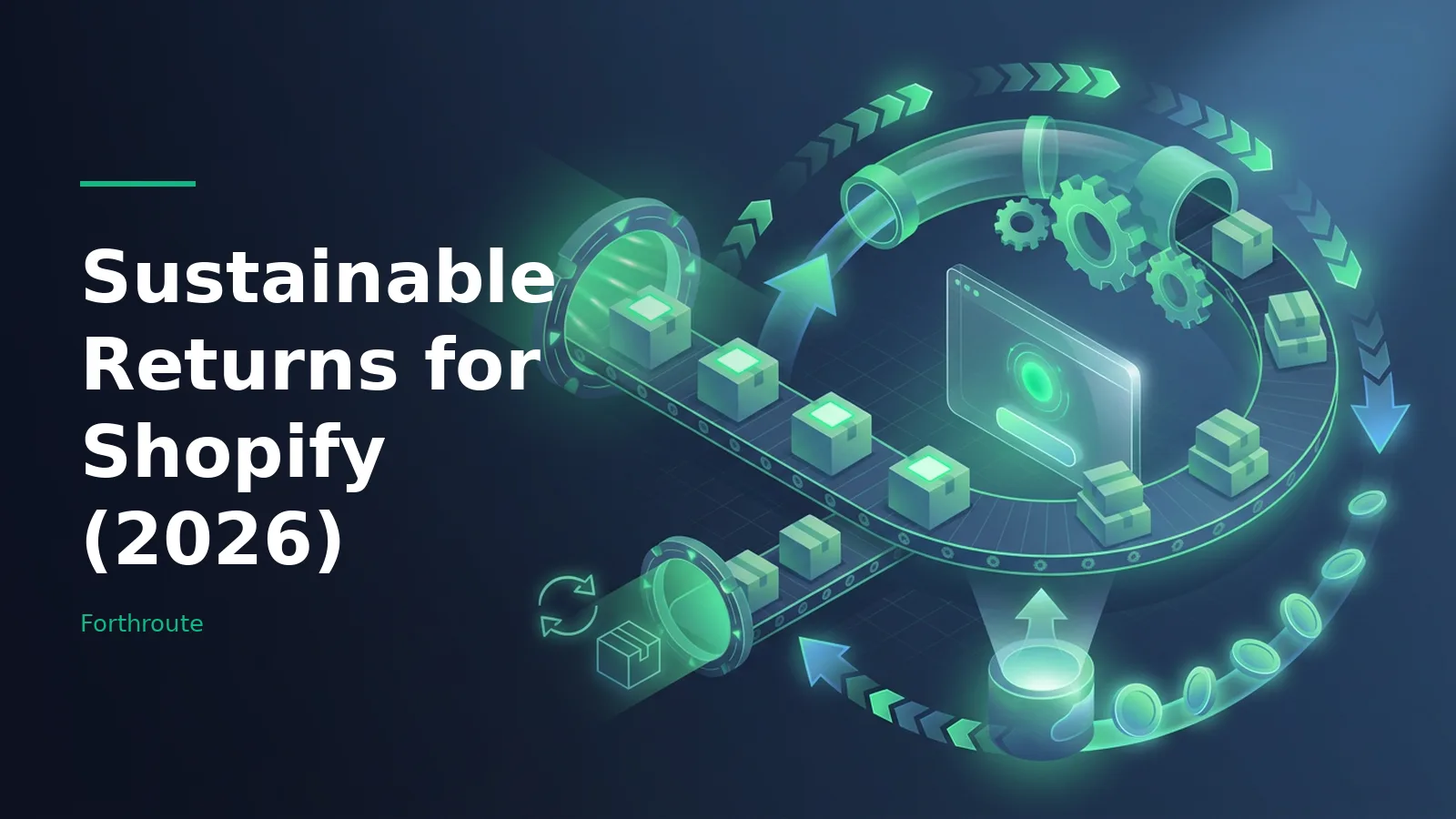
Sustainable Returns for Shopify: Cut Carbon, Cut Costs (2026)
TL;DR: Sustainable returns cut both carbon emissions and costs by grouping shipments, consolidating returns, and reducing single-use packaging—seven key levers that save Shopify brands on reverse logistics. Forthroute helps Shopify operators implement these sustainable returns strategies through streamlined reverse logistics management that optimizes exchanges, refunds, and RMA processes.
Last updated: July 2026
TL;DR. Group shipments, consolidate returns, and reduce single-use packaging. The seven sustainability levers that also save Shopify brands on reverse logistics.
If you operate returns at scale on Shopify, this guide is one of 25 spokes inside the Shopify Returns Management Hub — start with the pillar for the operator-level overview, then come back here for the deep dive on sustainable returns shopify. The short answer to "How do I make ecommerce returns more sustainable?": work the framework below, ship the policy wording, and instrument the metric we call out at the end.
Carbon impact of a return
Carbon impact of a return is a load-bearing step. The Forthroute team works with Shopify brands on returns, and this is the version of the playbook that survives contact with peak season.
Use the rule set below as your default and adjust the thresholds for your category and AOV.
- Define the input you actually have (Shopify order data, return reason, customer cohort).
- Pick a default rule that handles 70% of cases without human review.
- Write the customer-facing wording before you write the rule — the wording is the product.
- Instrument the conversion (refund-to-exchange, repeat-return rate, refund cycle time).
Consolidated return shipments
Consolidated return shipments is a load-bearing step. The Forthroute team works with Shopify brands on returns, and this is the version of the playbook that survives contact with peak season.
Use the rule set below as your default and adjust the thresholds for your category and AOV.
- Define the input you actually have (Shopify order data, return reason, customer cohort).
- Pick a default rule that handles 70% of cases without human review.
- Write the customer-facing wording before you write the rule — the wording is the product.
- Instrument the conversion (refund-to-exchange, repeat-return rate, refund cycle time).
Recycled packaging programs
Recycled packaging programs is a load-bearing step. The Forthroute team works with Shopify brands on returns, and this is the version of the playbook that survives contact with peak season.
Use the rule set below as your default and adjust the thresholds for your category and AOV.
- Define the input you actually have (Shopify order data, return reason, customer cohort).
- Pick a default rule that handles 70% of cases without human review.
- Write the customer-facing wording before you write the rule — the wording is the product.
- Instrument the conversion (refund-to-exchange, repeat-return rate, refund cycle time).
Refurb-and-resell flows
Refurb-and-resell flows is a load-bearing step. The Forthroute team works with Shopify brands on returns, and this is the version of the playbook that survives contact with peak season.
Use the rule set below as your default and adjust the thresholds for your category and AOV.
- Define the input you actually have (Shopify order data, return reason, customer cohort).
- Pick a default rule that handles 70% of cases without human review.
- Write the customer-facing wording before you write the rule — the wording is the product.
- Instrument the conversion (refund-to-exchange, repeat-return rate, refund cycle time).
Customer-facing sustainability claims
Customer-facing sustainability claims is a load-bearing step. The Forthroute team works with Shopify brands on returns, and this is the version of the playbook that survives contact with peak season.
Use the rule set below as your default and adjust the thresholds for your category and AOV.
- Define the input you actually have (Shopify order data, return reason, customer cohort).
- Pick a default rule that handles 70% of cases without human review.
- Write the customer-facing wording before you write the rule — the wording is the product.
- Instrument the conversion (refund-to-exchange, repeat-return rate, refund cycle time).
FAQ
How do I make ecommerce returns more sustainable?
Yes — and the framework above gives you the operator answer in under 700 words. Group shipments, consolidate returns, and reduce single-use packaging. The seven sustainability levers that also save Shopify brands on reverse logistics.
How does this affect refund cycle time on Shopify?
Most operators see refund cycle time drop from 7-9 days to 3-5 days once the rules above are in place. The biggest single lever is auto-approval for low-risk, low-value returns.
Does Forthroute support sustainable returns shopify natively?
Yes. Forthroute ships with the rule engine, customer portal, and Shopify-native integration the framework above assumes. Pricing is free — see pricing.
Where does this fit in the broader Returns Management Hub?
This spoke is one of 25 inside the Shopify Returns Management Hub. The pillar covers the full operator overview; come back to this spoke when you specifically need to solve sustainable returns shopify.
Next step
If you want the full operator playbook across all 25 spokes, the Shopify Returns Management Hub stitches them together. If you want to ship this in one afternoon on Shopify, install Forthroute — it's free.
How do you measure the carbon footprint of a single return?
Before you can optimize for sustainability, you need a baseline. A single return's carbon footprint includes the outbound shipment (original delivery), the inbound return logistics (customer shipping the item back), the warehouse handling and inspection, and either refurbishment or disposal.
Most Shopify operators focus only on the inbound leg—the customer's return trip—but the full cycle matters.
Start by mapping your actual return flows: What percentage of returns come via ground vs. expedited shipping? How many items are inspected and resold vs. scrapped? How far does your return warehouse sit from your fulfillment center? Once you have these data points from your Shopify order history and returns logs, you can estimate impact per return category (apparel vs. electronics, for example, have very different refurb economics). The goal is not perfection—it's a workable model that lets you compare one strategy to another.
Batch returns processing and its operational trade-offs
Consolidating individual customer returns into scheduled batch shipments is one of the highest-leverage moves for cutting carbon. Instead of a customer dropping a return in the mail immediately and your warehouse receiving trickles of parcels daily, you encourage customers to hold items for 5–10 days and offer a prepaid label that routes to a consolidation hub.
That hub batches dozens of returns into full pallets to your warehouse.
The trade-off is speed. Customers see a longer refund window (often 10–15 days instead of 3–5). You mitigate this by being transparent in your return policy, using a branded Shopify returns portal that shows the timeline upfront, and offering email updates when their batch ships. Some brands sweeten the deal with a small discount or loyalty credit if the customer opts in to batching. The operational win—fewer individual shipments, lower per-unit transport cost, and reduced packaging waste—usually outweighs the slower refund cycle for most customer cohorts.
Returns portal design and customer behavior steering
Your branded returns portal is the lever that shapes customer decisions before they ship anything back. A well-designed portal can nudge customers toward more sustainable choices without friction. For example:
- Offer exchanges prominently before refunds. An exchange eliminates a return shipment and often avoids a refund, so it's the greenest option. Show exchange options in large, obvious buttons.
- Display the refund timeline transparently. If batch processing takes 12 days vs. expedited at 3, show both options with clear labeling so customers can choose.
- Use QR labels that auto-populate return reason. When customers select a reason in the portal (fit issue, defective, changed mind), the QR label they print contains that metadata. Your warehouse scans and routes the item faster, reducing sorting time and mishandled refurbs.
- Surface store credit or in-app rewards as a refund alternative. Some customers will accept store credit if the incentive is visible and frictionless in the portal.
Tracking and communicating sustainability impact
Once you've implemented these levers, measure outcomes that matter to both your bottom line and your environmental narrative. Track refund-to-exchange ratio week over week—a rising ratio signals your portal design is working.
Monitor average refund cycle time to spot bottlenecks in your batch processing. Count the number of items routed to refurb vs. liquidation; higher refurb rates mean less waste and more revenue recovery.
Share these metrics in your customer communications. When a customer receives their exchange confirmation, remind them they've avoided a return shipment. In your quarterly sustainability report (if you publish one), call out how many tons of CO₂ the batch consolidation saved, or how many returns were refurbished instead of discarded. Transparency builds trust and often increases repeat purchase rates among sustainability-conscious buyers.
Run Shopify returns in a branded portal you control — Forthroute, no subscription or monthly return limit.
About the Author

Hylke Reitsma is co-founder of Forthsuite and a supply chain specialist with 8+ years of hands-on experience at Shell, Verisure, and Stryker. He holds an MSc in Supply Chain Management from the University of Groningen and writes practical guides to help e-commerce teams run leaner, faster supply chains. Selected by Replit as 1 of 20 founders for the inaugural Race to Revenue Cohort #1 (2026) and certified as a Replit Platform Builder.
LinkedIn