Shopify Returns Analytics (2026)
Shopify returns analytics that drive operator decisions: refund-to-exchange ratio, return reason mix, and repeat-returner cohorts.
Hylke Reitsma is co-founder of Forthsuite and a supply chain specialist with 8+ years of hands-on experience at Shell, Verisure, and Stryker. He holds an MSc in Supply Chain Management from the University of Groningen and writes practical guides to help e-commerce teams run leaner, faster supply chains. Selected by Replit as 1 of 20 founders for the inaugural Race to Revenue Cohort #1 (2026) and certified as a Replit Platform Builder.
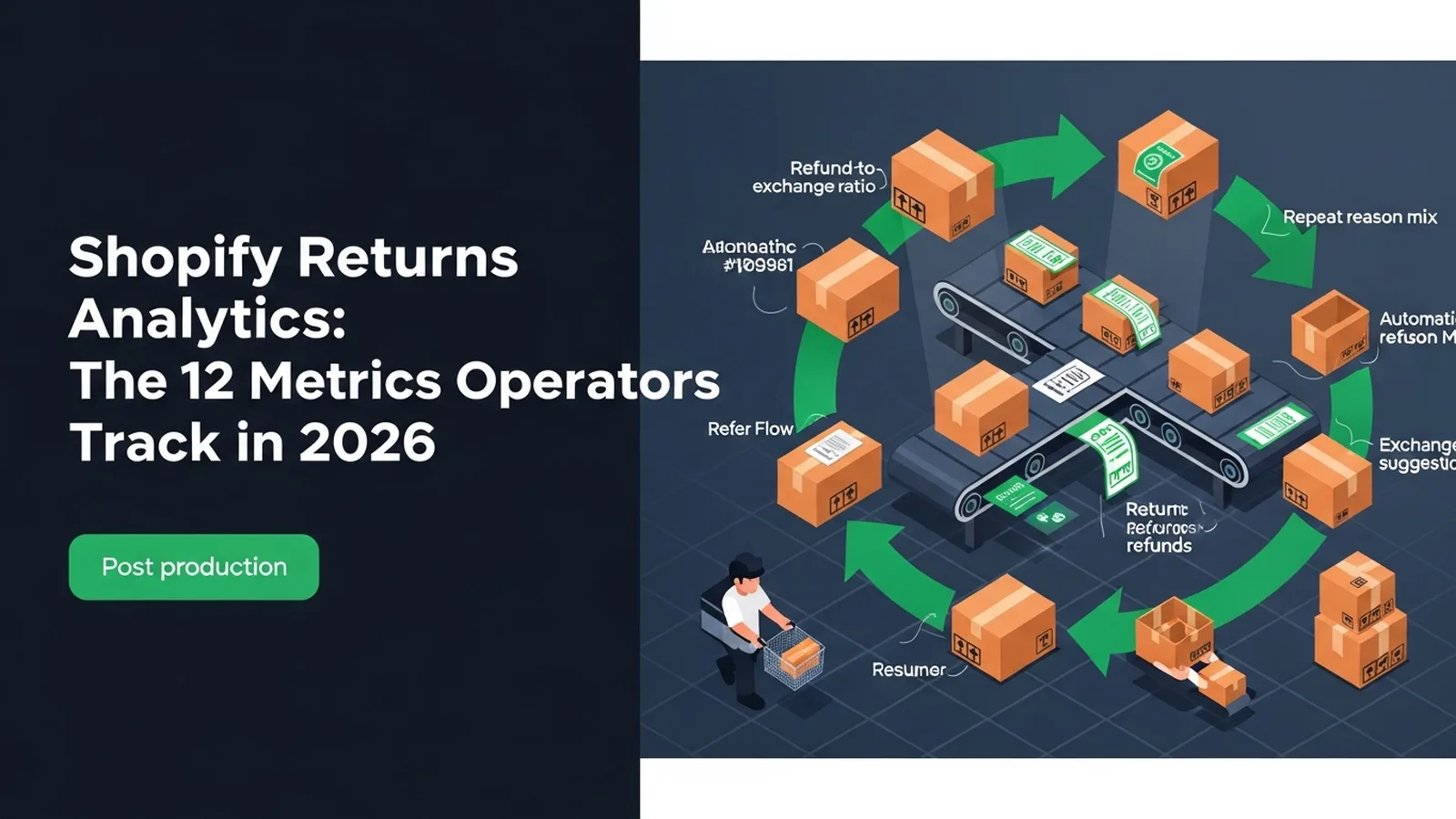
Shopify Returns Analytics: The 12 Metrics Operators Track in 2026
TL;DR: The 12 essential returns metrics Shopify operators track in 2026 include refund-to-exchange ratio, return reason mix, repeat-returner cohort, and nine other critical indicators that directly inform operational decisions. Forthroute helps Shopify brands manage returns, refunds, and exchanges by streamlining reverse logistics and surfacing the analytics needed to optimize your returns strategy.
Last updated: July 2026
TL;DR. Refund-to-exchange ratio, return reason mix, repeat-returner cohort — the 12 returns metrics that drive operator decisions.
If you operate returns at scale on Shopify, this guide is one of 25 spokes inside the Shopify Returns Management Hub — start with the pillar for the operator-level overview, then come back here for the deep dive on shopify returns analytics. The short answer to "What returns analytics should I track on Shopify?": work the framework below, ship the policy wording, and instrument the metric we call out at the end.
The 12 metrics
The 12 metrics is a load-bearing step. The Forthroute team works with Shopify brands on returns, and this is the version of the playbook that survives contact with peak season.
Use the rule set below as your default and adjust the thresholds for your category and AOV.
- Define the input you actually have (Shopify order data, return reason, customer cohort).
- Pick a default rule that handles 70% of cases without human review.
- Write the customer-facing wording before you write the rule — the wording is the product.
- Instrument the conversion (refund-to-exchange, repeat-return rate, refund cycle time).
Where to view each in Shopify
Where to view each in Shopify is a load-bearing step. The Forthroute team works with Shopify brands on returns, and this is the version of the playbook that survives contact with peak season.
Use the rule set below as your default and adjust the thresholds for your category and AOV.
- Define the input you actually have (Shopify order data, return reason, customer cohort).
- Pick a default rule that handles 70% of cases without human review.
- Write the customer-facing wording before you write the rule — the wording is the product.
- Instrument the conversion (refund-to-exchange, repeat-return rate, refund cycle time).
Setting target thresholds
Setting target thresholds is a load-bearing step. The Forthroute team works with Shopify brands on returns, and this is the version of the playbook that survives contact with peak season.
Use the rule set below as your default and adjust the thresholds for your category and AOV.
- Define the input you actually have (Shopify order data, return reason, customer cohort).
- Pick a default rule that handles 70% of cases without human review.
- Write the customer-facing wording before you write the rule — the wording is the product.
- Instrument the conversion (refund-to-exchange, repeat-return rate, refund cycle time).
Weekly review cadence
Weekly review cadence is a load-bearing step. The Forthroute team works with Shopify brands on returns, and this is the version of the playbook that survives contact with peak season.
Use the rule set below as your default and adjust the thresholds for your category and AOV.
- Define the input you actually have (Shopify order data, return reason, customer cohort).
- Pick a default rule that handles 70% of cases without human review.
- Write the customer-facing wording before you write the rule — the wording is the product.
- Instrument the conversion (refund-to-exchange, repeat-return rate, refund cycle time).
How metrics connect to forecasting
How metrics connect to forecasting is a load-bearing step. The Forthroute team works with Shopify brands on returns, and this is the version of the playbook that survives contact with peak season.
Use the rule set below as your default and adjust the thresholds for your category and AOV.
- Define the input you actually have (Shopify order data, return reason, customer cohort).
- Pick a default rule that handles 70% of cases without human review.
- Write the customer-facing wording before you write the rule — the wording is the product.
- Instrument the conversion (refund-to-exchange, repeat-return rate, refund cycle time).
FAQ
What returns analytics should I track on Shopify?
Yes — and the framework above gives you the operator answer in under 700 words. Refund-to-exchange ratio, return reason mix, repeat-returner cohort — the 12 returns metrics that drive operator decisions.
How does this affect refund cycle time on Shopify?
Most operators see refund cycle time drop from 7-9 days to 3-5 days once the rules above are in place. The biggest single lever is auto-approval for low-risk, low-value returns.
Does Forthroute support shopify returns analytics natively?
Yes. Forthroute ships with the rule engine, customer portal, and Shopify-native integration the framework above assumes. Pricing is free — see pricing.
Where does this fit in the broader Returns Management Hub?
This spoke is one of 25 inside the Shopify Returns Management Hub. The pillar covers the full operator overview; come back to this spoke when you specifically need to solve shopify returns analytics.
Next step
If you want the full operator playbook across all 25 spokes, the Shopify Returns Management Hub stitches them together. If you want to ship this in one afternoon on Shopify, install Forthroute — it's free.
How to Link Returns Analytics to Your Refund and Exchange Strategy
Tracking 12 metrics is only useful if you act on what they reveal. The connection between analytics and operational decisions happens at the decision-rule level. Each metric should feed directly into a policy choice: Does a high refund-to-exchange ratio mean you should prompt customers toward store credit? Does a spike in size-related returns signal a need to improve product descriptions or fit guides? Does a cohort of repeat returners warrant a follow-up conversation about fit or quality?
Start by mapping each metric to a single operational lever you can actually pull. For refund-to-exchange ratio, that lever might be your checkout-flow messaging or the incentive you offer on the branded returns portal. For repeat-returner cohort, it might be a targeted email or a pre-return conversation. For return-reason mix, it might be product content or supplier quality audits. The discipline is: metric → insight → action → measurement of the action's effect.
This loop is where analytics tools become decision-support systems rather than dashboards that sit unread. Forthroute surfaces these metrics in a way that prompts that action: the portal shows customers why exchanges help you, the dashboard alerts you when a threshold shifts, the labels and refund automation handle the mechanics so your team focuses on strategy.
Common Blind Spots in Returns Dashboards: What Most Operators Miss
Many Shopify brands instrument returns analytics but overlook three frequent gaps that hide real cost and risk.
First: focusing only on volume, not velocity. A stable return rate tells you little if the refund-processing timeline is stretching. Track not just how many returns land, but how long they sit in your warehouse before inspection, how long inspection takes, and how long between inspection and refund issuance. A slowdown in any step can erode customer trust even if return counts look flat.
Second: missing the repeat-returner signal until it becomes a problem. Many operators track individual return reasons well but don't segment by customer cohort. A customer who returns three items in six months is a different case from a customer who returns once per year. One pattern may indicate fit confusion or a product quality issue you can address; the other might indicate a high-return-rate customer who rarely repurchases. Knowing which is which changes how you respond.
Third: ignoring the financial lag between a refund decision and when cash actually leaves your account. If you approve 100 refunds on Monday but process them over a week, your cash flow and your actual refund rate diverge. This matters less for small volumes but becomes operationally significant at scale, especially around peak season when refund velocity peaks.
Why Weekly Review Cadence Works Better Than Daily or Monthly
Many operators ask whether they should review returns analytics daily or monthly. Weekly is the practical sweet spot for most Shopify brands, and here's why.
Daily review often creates noise: a single day's return spike may be a shipping delay clearing or a one-off order error, not a trend. You react to volatility instead of signal, which burns cycles and creates alarm fatigue. Monthly review, on the other hand, buries the insight. By the time you notice a pattern four weeks in, you've already processed hundreds of returns under a suboptimal policy.
Weekly review gives you enough data to distinguish signal from noise (typically 30–100 returns for mid-market brands), enough time to batch decisions and avoid daily firefighting, and enough frequency to catch emerging patterns before they metastasize. A weekly meeting with your ops lead and customer service manager to review the dashboard, discuss threshold breaches, and plan the coming week is typically where returns analytics shift from observation to action.
What Happens When You Don't Instrument Returns Metrics?
Brands that run returns at scale without analytics often discover this only after the damage is visible: customer complaints spike, refund timelines slip, or repeat-return cohorts grow undetected. Without a dashboard, you're flying blind.
You can't distinguish between a temporary spike and a systemic issue, you can't spot which products or size runs are problematic, and you can't measure whether a policy change actually worked.
The cost of that blindness compounds. A supplier quality issue costs more when you discover it via a surge in returns rather than by tracking return reason mix. An exchange-rate problem costs more when customers notice slow refunds rather than when you see it first in the dashboard. Instrumentation is the early-warning system.
Run Shopify returns in a branded portal you control — Forthroute, no subscription or monthly return limit.
About the Author

Hylke Reitsma is co-founder of Forthsuite and a supply chain specialist with 8+ years of hands-on experience at Shell, Verisure, and Stryker. He holds an MSc in Supply Chain Management from the University of Groningen and writes practical guides to help e-commerce teams run leaner, faster supply chains. Selected by Replit as 1 of 20 founders for the inaugural Race to Revenue Cohort #1 (2026) and certified as a Replit Platform Builder.
LinkedIn