Return Management Platform: 7 Compared for 2026
Choosing a return management platform in 2026: seven compared on scan speed, POS sync and exchanges.
Hylke Reitsma is co-founder of Forthsuite and a supply chain specialist with 8+ years of hands-on experience at Shell, Verisure, and Stryker. He holds an MSc in Supply Chain Management from the University of Groningen and writes practical guides to help e-commerce teams run leaner, faster supply chains. Selected by Replit as 1 of 20 founders for the inaugural Race to Revenue Cohort #1 (2026) and certified as a Replit Platform Builder.
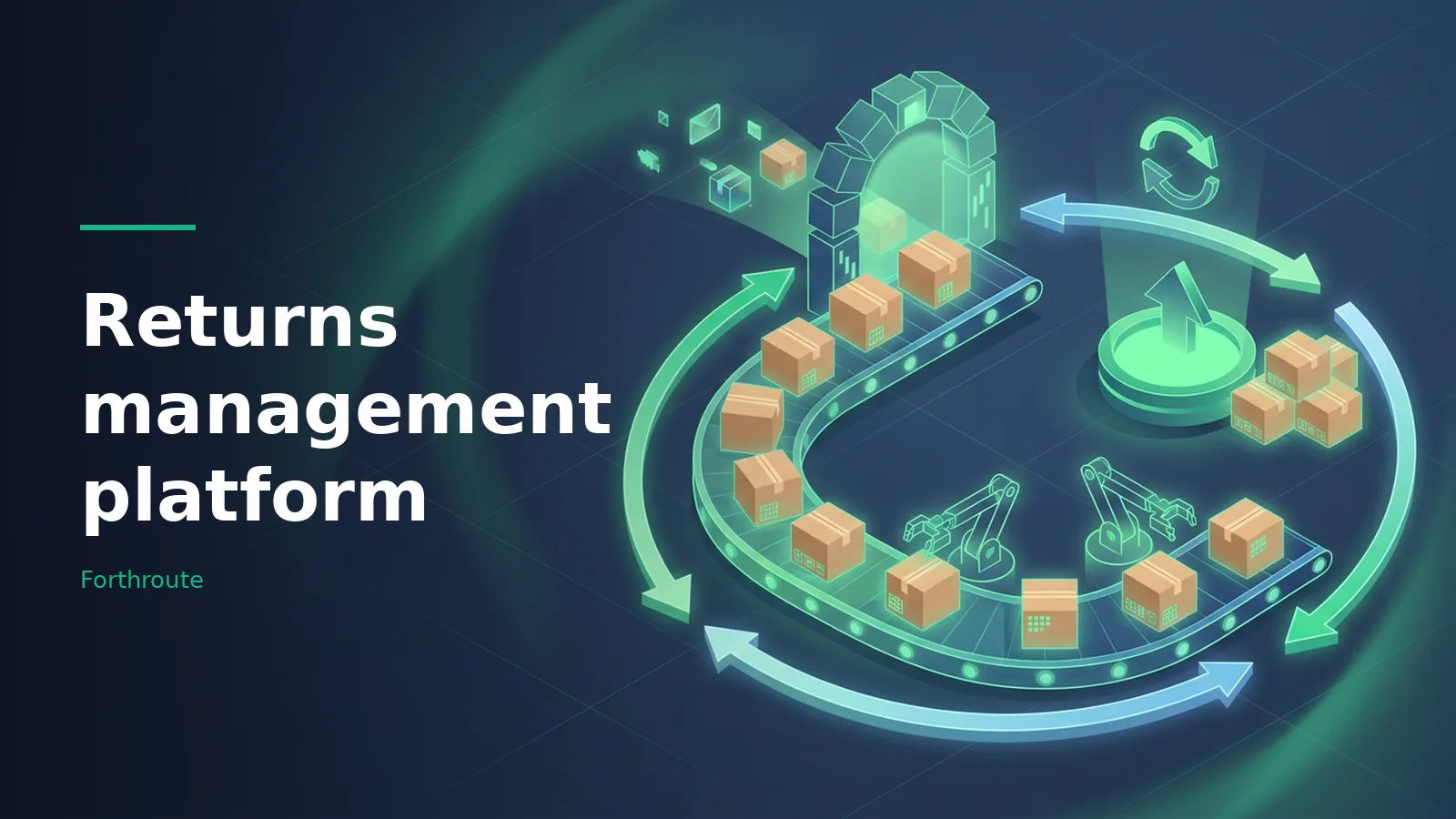
7 Best In-Store Return Management Tools for Retail (Tested & Ranked for 2026)
Last updated: June 2026
TL;DR: Compare whether each return platform supplies physical drop-off locations, POS workflows, fraud controls, and Shopify support. Forthroute is Shopify returns-management software with a branded portal, approval rules, exchange support, merchant-issued refunds, return-leg tracking, and optional prepaid labels.
Managing returns effectively is critical for Shopify merchants in 2026. With up to 30% of ecommerce sales resulting in returns, having the right tools can turn potential losses into opportunities to retain customers and boost profits. This list highlights the 7 best in-store return management tools that simplify returns, reduce fraud, and integrate seamlessly with Shopify POS.
Key Takeaways:
88% of shoppers say a seamless returns experience directly influences their likelihood to buy again from a brand (Narvar Consumer Report, 2024).
- Forthroute: No software subscription or monthly return limit; includes approval rules, exchange support, a branded portal, and optional prepaid labels billed at carrier cost plus a 1% handling markup rounded up to the next $0.10.
- Happy Returns: Offers 10,000+ drop-off locations with physical inspections; pricing is custom.
- Square POS Returns: Simplifies returns with barcode scanning and real-time inventory tracking; pricing depends on your Square plan.
- Loop Returns: Advanced fraud detection and exchange-first features; starts at ~$155/month.
- AfterShip Returns Center: Essentials is $19/month or $192/year ($16/month equivalent), supports global logistics and automation.
- ReturnLogic: Best for high-volume merchants needing analytics and automation; usage-based and custom enterprise pricing.
- ReturnBear: Simple, no-frills option with entry-level pricing for basic in-store workflows.
Quick Comparison Table:
| Tool | Shopify Integration | In-Store Features | Fraud Prevention | Starting Price (2026) |
|---|---|---|---|---|
| Forthroute | Shopify app | Branded portal; optional QR labels | Approval rules; merchant-issued refunds | No software subscription; optional labels charged separately |
| Happy Returns | Partner integration | 10,000+ drop-off locations | Physical inspections | Custom pricing |
| Square POS | Third-party POS | Barcode scanning, inventory | Policy enforcement | Varies by Square plan |
| Loop Returns | Premier partner | Exchange-first workflows | AI blocklists, rules | ~$155/month |
| AfterShip | Deep integration | Global carrier support | Automation rules | $19/month or $192/year ($16/month equivalent) |
| ReturnLogic | Deep integration | Analytics, multi-location | Advanced fraud detection | Usage-based / custom pricing |
| ReturnBear | Deep integration | Basic workflows | Photo verification | Entry-level pricing |
These tools cater to different business needs, from small startups to high-volume retailers. Whether you need simple automation or advanced fraud detection, there's a solution for you. Let’s explore each tool in detail.

Shopify In-Store Return Management Tools Comparison 2026
Rethinking Retail Return Logistics with Fillogic and Loop Returns

sbb-itb-a3e286c
1. Happy Returns

Happy Returns operates over 10,000 Return Bar locations across the United States, including partnerships with The UPS Store and Staples. This network allows Shopify merchants' customers to enjoy box-free and label-free return drop-offs.
Omnichannel Integration and BORIS Workflows
The platform seamlessly ties online purchases to physical return points. Customers start the return process through a custom-branded portal, which generates a QR code they can use at any Return Bar location. Once at the location, staff inspect the returned item, verify its condition, and immediately process the refund. To reduce reverse logistics costs, Happy Returns consolidates individual returns into bulk shipments.
Fraud Prevention Features
One of the standout features is fraud prevention. By requiring physical inspections at drop-off points, the platform minimizes risks like "empty box" scams. Refunds are only approved after staff confirm the item's condition at the Return Bar.
Pricing and Affordability for 2026
Happy Returns uses a custom pricing model tailored to retailer volume. This includes a base fee combined with charges per item. As of March 2026, the platform boasts a 4.8/5 rating, with users highlighting its convenient boxless return options and speedy refund process. However, it’s worth noting that the service is primarily geared toward U.S.-based businesses, and some retailers have reported challenges with the initial setup.
Next, we’ll look at another solution aimed at making returns even easier for Shopify merchants.
2. Forthroute for Shopify
Forthroute is Shopify returns-management software with a branded customer portal, approval rules, exchange support, one-click merchant-issued refunds, and tracking for the return shipment.
Shopify Workflow
Customers can request a refund, exchange, or store credit through the portal. Approval rules can move a request to approved status, but refunds are never issued automatically: a merchant initiates every refund and can restock in the same step.
Labels and Return Tracking
Forthroute supports printerless QR labels through carrier drop-off locations and tracks the return leg. It does not operate physical Return Bars or track every outbound parcel.
Pricing
The software has no subscription or monthly return limit. Optional Forthroute-brokered prepaid labels are billed through Shopify at carrier cost plus a 1% handling markup, rounded up to the next $0.10; merchants can instead connect their own carrier account.
3. Square POS Returns

Square POS offers Shopify merchants a practical way to connect online and in-store shopping experiences, especially when it comes to managing returns. This mobile point-of-sale system simplifies in-store return processes with features like centralized order management and barcode or ticket scanning. For merchants with physical retail locations, it helps unify the online and offline sales channels.
Omnichannel Integration
Square makes it easier to handle returns across channels by synchronizing online and offline systems. Features like barcode scanning and digital receipts allow for seamless return verification at the register. This means customers can buy items online and return them in-store without any hassle. Real-time inventory tracking ensures stock levels stay accurate, while Square’s standalone system integrates smoothly with Shopify, helping merchants streamline return workflows through barcode scanning.
Pricing and Affordability in 2026
Square also provides tools like analytics and sales reports, which help retailers track return trends and improve overall operations. This level of transparency is particularly useful for small to medium-sized businesses. Pricing depends on your Square plan, which keeps entry costs manageable for many merchants.
For more tips on managing in-store returns and combining physical and online operations, check out these guides: Ecommerce Inventory Management for Shopify Brands and Global Supply Chain Management. Stay tuned as we dive into more features and benefits to optimize your Shopify returns process.
4. Loop Returns
When it comes to simplifying in-store return management for Shopify, Loop Returns stands out with tools designed to support both online and physical stores. As the only Shopify Premier Partner focused on returns and exchanges, Loop Returns integrates seamlessly with Shopify’s ecosystem. Impressively, merchants using Loop contribute to over 15% of Shopify’s total Gross Merchandise Volume (GMV), highlighting its major role in the returns management space.
Omnichannel Integration (BORIS Workflows)
Loop excels at handling Buy Online, Return In-Store (BORIS) scenarios. Its "Workflows" feature automates return decisions by leveraging logistics and POS data. With integrations across more than 120 systems - including 3PL providers like Ryder and customer service platforms like Gorgias - Loop creates a unified, smooth experience for post-purchase operations. This means customers can start a return online and finalize it effortlessly in a physical store.
Shopify POS Compatibility
Loop’s integration with Shopify POS offers tailored features to streamline in-person returns while keeping costs under control. Merchants can implement consistent return policies and fraud detection measures across both online and in-store returns. These custom POS tools ensure that returns are processed efficiently and securely, reinforcing fraud prevention efforts.
Fraud Prevention Features
To protect revenue, Loop includes a robust fraud prevention suite powered by AI. Features like Workflows, Custom Rules, and Blocklists automatically detect and prevent return abuse. Merchants can customize rules to block returns based on factors like customer history, item type, or risk levels flagged by the system. This advanced fraud detection is a key safeguard for businesses.
Pricing and Affordability for 2026
Loop Returns offers flexible pricing to cater to businesses at various stages of growth. It’s designed for everyone - from startups to large enterprises. The platform helps offset costs with features like Bonus Credit, Shop Now (enabling customers to browse the full catalog during returns), and Instant Exchanges, which encourage exchanges instead of refunds. Pricing begins at $155 per month for the Essential plan, with the Advanced plan priced at $340 per month, and custom options available for enterprise-level needs.
5. AfterShip Returns Center

AfterShip Returns Center offers an economical global logistics solution tailored for Shopify merchants. Boasting a 4.6/5 star rating on G2 and Capterra, it’s widely praised for its dependability and user-friendly interface. The platform connects with over 13 major shipping carriers - including UPS, USPS, FedEx, and DHL - making it a strong choice for managing international returns.
Omnichannel Integration (BORIS Workflows)
AfterShip enhances the return process by seamlessly integrating in-store and online workflows. Its support for Return to Store (BORIS) workflows allows merchants to offer flexibility to their customers. The branded, multilingual portal lets shoppers track their returns in real time, reducing confusion and cutting down on support inquiries. To make returns even easier, the platform generates return labels and QR codes, simplifying the drop-off process.
Fraud Prevention Features
AfterShip tackles return fraud with its Smart Return Rules. Merchants can customize return windows, flag non-returnable items, and automate the approval or rejection of returns based on set criteria. These tools help minimize return rates by intercepting ineligible requests early in the process. Additionally, features like auto-refunds and auto-restocking save time by reducing manual tasks. These fraud prevention measures align with the platform's budget-friendly pricing, making it a practical option for Shopify merchants.
Pricing and Affordability for 2026
The AfterShip Shopify listing, checked September 5, 2026, lists Essentials at $19/month or $192/year ($16/month equivalent). The monthly offer includes 20 returns per month with $0.50 per extra return. Confirm the allowance reset for the billing term you select; an annual price divided by twelve is not a monthly contract. Despite its low entry cost, the platform includes advanced options like exchange-for-any-product and "Green Returns", which let customers keep items instead of returning them. For Shopify Plus users, additional perks, such as issuing gift cards for returns, are also available. This combination of affordability and advanced functionality makes AfterShip a standout choice for businesses of all sizes.
6. ReturnLogic

ReturnLogic caters to Shopify merchants handling high sales volumes, offering advanced tools for analytics and automation to streamline returns across multiple locations. With its automation engine integrated with ERPs and third-party logistics, it has earned a solid 4.4/5 rating on G2 and Capterra.
Omnichannel Integration (BORIS Workflows)
The platform excels at supporting "Buy Online, Return In-Store" (BORIS) workflows. This feature not only simplifies returns but also encourages foot traffic to physical stores, creating a seamless experience for both online and in-store operations. It’s built to handle multi-store and multi-warehouse setups, ensuring return data stays synchronized across all channels.
Shopify POS Compatibility
ReturnLogic works directly with Shopify POS, enabling easy in-store processing of returns for online purchases. This integration ensures real-time inventory updates for both online and brick-and-mortar stores, making it a reliable tool for merchants managing diverse sales channels.
Fraud Prevention Tools
ReturnLogic includes customizable automation rules to manage return eligibility and detect suspicious activities. Its analytics tools are designed to catch anomalies like frequent returns or patterns from serial returners. Integrated warranty management ensures claims align with product policies, while ERP and 3PL connections provide a unified view of operations, reducing the risk of duplicate returns across locations.
Pricing and Affordability for 2026
Pricing for ReturnLogic is tailored to individual businesses and isn’t publicly available, making it a better fit for enterprise-level merchants and brands with high transaction volumes. While users appreciate its powerful analytics and automation features, they note a steep learning curve and limited transparency around pricing. Up next, we’ll take a closer look at ReturnBear as we continue exploring in-store return management tools for Shopify.
7. ReturnBear

ReturnBear wraps up our list with a simple, no-frills solution for Shopify merchants who want straightforward return management. This platform focuses on providing essential tools and easy-to-use omnichannel integration, making it a good fit for those who don’t need the advanced automation offered by more complex systems. It’s all about getting the basics right for managing both online and in-store returns.
Omnichannel Integration (BORIS Workflows)
With ReturnBear, customers can initiate returns online and finalize them in-store using basic BORIS (Buy Online, Return In-Store) workflows. This feature is especially handy for small to mid-sized Shopify merchants with just a few retail locations, ensuring a smooth and consistent return experience across different channels.
Shopify POS Compatibility
ReturnBear also works with Shopify POS, allowing merchants to process in-store returns for online orders. This integration keeps inventory updates flowing between online and physical stores without unnecessary complications. While it doesn’t come with the detailed dashboards or automation of other platforms, its simplicity makes it a great choice for merchants who value ease of use over complexity.
Pricing and Affordability for 2026
ReturnBear positions itself as an affordable way for Shopify merchants to manage returns efficiently. Its entry-level pricing makes it an attractive option for businesses looking to streamline their return processes without breaking the bank.
Also worth a look: A few other returns platforms are worth knowing even though they are not ranked above. Return Prime is a widely used returns management app for Shopify stores. ReturnGO is a returns and exchanges management platform with a self-service portal and automation features. Narvar is an enterprise post-purchase platform that handles returns alongside order tracking and delivery communications. Yanet Returns is a low-cost returns and exchange app for Shopify with a free entry plan. Returnly was a well-known returns platform but has been discontinued and is no longer available to new merchants.
Feature Comparison for In-Store Return Management Tools for Shopify 2026
Here’s a handy breakdown of features, integration options, fraud prevention measures, and pricing for Shopify in-store return tools. This table gives Shopify merchants a quick way to compare options.
| Tool | Shopify Integration | In-Store Capabilities | Fraud Detection | 2026 Starting Pricing |
|---|---|---|---|---|
| Forthroute | Shopify app | Branded portal; optional QR labels | Approval rules; merchant-issued refunds | No software subscription; optional labels charged separately |
| Happy Returns | Integrated Partner | 8,000+ Return Bar Locations | Physical Inspection at Drop-off | Custom |
| Square POS Returns | Third-Party POS | Native POS Workflows | Policy Enforcement Rules | Custom |
| Loop Returns | Premier Partner | POS Integration & Workflows | Blocklists & Custom Rules | ~$155/month |
| AfterShip Returns Center | Deep Integration | "Return to Store" Feature | Automation Rules | $19/month or $192/year ($16/month equivalent) |
| ReturnLogic | Deep Integration | Warehouse Intake Tools | Policy Enforcement Rules | Usage-based / custom pricing |
| ReturnBear | Deep Integration | Basic BORIS Workflows | Photo/Info Requirements | Entry-level pricing |
- Forthroute: Offers a branded portal and approval rules with no software subscription or monthly return limit. Optional prepaid labels are billed separately at carrier cost plus a 1% handling markup.
- AfterShip Returns Center: Essentials costs $19/month or $192/year ($16/month equivalent). Includes a "Return to Store" feature and basic automation rules.
- Loop Returns: A Shopify Premier Partner priced at ~$155/month. Loop says it supports over 15% of Shopify’s total GMV, offering advanced workflows and fraud detection with blocklists and custom rules.
- Happy Returns: Focuses on physical inspections at its 8,000+ Return Bar locations. Pricing is custom, typically scaling with transaction volume and return locations.
- Square POS Returns: Provides native workflows for third-party POS systems and enforces return policies. Pricing is custom and enterprise-focused.
- ReturnLogic: Designed for high-volume operations, this tool uses usage-based and custom enterprise pricing and includes warehouse intake tools and advanced policy enforcement.
- ReturnBear: An entry-level option, it delivers basic BORIS (Buy Online, Return In-Store) workflows, making it a good fit for merchants managing smaller retail chains.
The pricing range - from AfterShip Essentials at $19/month or $192/year ($16/month equivalent) to ReturnLogic's usage-based and custom enterprise pricing - caters to Shopify merchants with diverse needs. Whether you’re looking for cost-effective solutions or tools with sophisticated fraud detection and backend integrations, there’s something for every business size.
For further insights, check out our guides on ecommerce inventory management and global supply chain management. These resources can help you make an informed decision as you plan your Shopify business strategy for 2026. Don't forget to explore our FAQ section for answers to common questions about in-store returns management for Shopify.
Where Forthroute Fits - and Where It Doesn't
Forthroute's software has no subscription or monthly return limit, but optional prepaid labels are not free: they are billed at carrier cost plus a 1% handling markup.
Forthroute is Shopify-only, so a multi-platform or store-first retailer sits outside its scope. It is also software, not a logistics network: it issues the label, routes the request and processes the refund or exchange, but it does not physically receive, inspect or restock returned goods. As this ranking already notes, Happy Returns brings thousands of physical drop-off locations with in-person inspection - Forthroute does not replace that.
Skip it if your returns problem is physical rather than procedural.
Conclusion
Selecting the best in-store return management tool for your Shopify store depends on factors like your business size, budget, and need for automation. Different tools cater to specific merchant needs, offering unique features to help streamline return processes.
For Shopify merchants that want a branded self-service portal, approval rules, exchange support, and merchant-issued refunds without a software subscription, Forthroute is a practical option. Optional prepaid labels are billed separately. If your priority is a physical drop-off network, evaluate a provider such as Happy Returns; Forthroute uses carrier locations and operates no Return Bars of its own.
For high-volume merchants, especially in industries like apparel and footwear where sizing issues drive returns, tools like Loop Returns (around $155/month) and ReturnLogic (usage-based and custom enterprise pricing) are worth exploring. These platforms emphasize an "exchange-first" approach and use AI-driven suggestions to convert refunds into exchanges, helping retain revenue. On the other hand, growing brands seeking international carrier integrations and multi-language support might find AfterShip Returns Center an option at $19/month or $192/year ($16/month equivalent).
The importance of return management is underscored by data showing a 24.5% average online retail return rate in the U.S. in 2026. Additionally, the Returns Management Software market is forecasted to grow from $13.26 billion in 2026 to $26.38 billion by 2035. Notably, 71% of consumers say a poor return experience could deter them from shopping with a store again. For tips on improving your Shopify store’s operations, check out our guide on ecommerce inventory management.
If you need Shopify returns software without a subscription, Forthroute provides a branded portal, approval rules, exchange support, merchant-issued refunds, and return-leg tracking. Add a separate provider when you need physical return locations or warehouse services outside that software scope.
Visit Forthroute for a branded Shopify return portal, approval rules, exchange support, merchant-issued refunds, and return-leg tracking. The software has no subscription; optional prepaid labels are billed at carrier cost plus a 1% handling markup.
Where it doesn’t fit
Where ForthRoute does not fit: it runs no physical drop-off network of its own — QR returns use the carrier's existing locations — and it tracks the return leg rather than every outbound parcel. Disclosure: ForthRoute is our own product and is included in this ranking.
FAQs
Do I need Shopify POS for in-store returns?
No, using Shopify POS isn’t mandatory for handling in-store returns, but it can make the process much easier. By integrating POS tools, you can streamline returns, keep inventory updated in real-time, and lower the risk of fraud. While standalone tools can handle returns, pairing a POS system with return management software boosts accuracy, reduces mistakes, and creates a smoother experience for customers - particularly in busy, high-traffic stores. If you’re already using Shopify POS, integration can bring even more advantages.
How can I prevent in-store return fraud?
Tackling in-store return fraud requires a mix of advanced technology and clear policies. AI-powered tools can be a game-changer here. These tools analyze return patterns in real-time, helping to spot anything suspicious before it becomes a bigger issue.
Pair technology with practical solutions like POS-integrated systems. These systems can use QR codes and real-time inventory updates to quickly verify returns, making the process both accurate and efficient.
It’s also important to train your staff to recognize signs of return abuse. Combine this with clear return policies - like requiring receipts or placing limits on frequent returns - to discourage fraudulent behavior.
By blending smart technology with strong policies, you can keep your store secure while still offering a seamless experience for honest customers.
What aspects of a returns workflow should be automated?
Automating critical aspects of your returns process can make operations smoother, cut down on mistakes, and improve the overall customer experience. Key areas to consider automating include inventory updates, return authorizations, fraud detection, and customer communications. AI-powered tools can handle tasks like generating return labels, updating inventory in real-time, and sending out branded notifications. By leveraging these automations, you can create a faster and more efficient returns process - something Shopify stores will need to stay competitive in 2026.
RELATED COMPARISON
Forthroute vs Loop Returns: Honest 2026 Pricing Comparison for Shopify — Loop Returns charges $155/mo+. See how Forthroute compares on pricing, automation depth, and Shopify merchant support.
Returns Management in 2026: AI Routing at the Point of Return
The biggest shift in returns management over the past year has been the widespread adoption of AI-powered routing decisions at the point of return initiation. Instead of defaulting to warehouse returns, platforms now evaluate item condition, location, and secondary market value in real-time to route products directly to refurbishers, liquidators, or regional redistribution centers.
This change was accelerated by carriers introducing dynamic pricing for return shipments in late 2025, making every unnecessary mile expensive enough to justify the software investment.
For B2B operators, this means return authorization workflows now require integration points you may not have built yet—connections to liquidation marketplaces, refurbishment partners, and regional fulfillment networks. Companies still routing everything back to a central DC are seeing higher per-unit return costs compared to those using intelligent disposition routing. The cost gap is wide enough that returns management is no longer just a customer service function; it's become a margin recovery operation that requires cross-functional ownership between logistics, finance, and product teams.
Watch for returns-as-a-service models to mature further in the next 12 months. Several platforms are piloting programs where they take title to returned inventory immediately, handling all disposition while providing instant accounting clarity. It's early, but the unit economics are starting to work for mid-volume operators.
Returns Management in 2026: Predictive Anomaly Detection
The biggest shift in returns management this year is the move from reactive processing to predictive anomaly detection. Major retailers are now routing returns through AI-powered classification systems that flag unusual patterns—serial returners, damaged goods clusters, fraudulent behavior—before they hit the warehouse floor.
This means returns teams are spending less time on manual inspection and more time on escalation workflows that actually matter.
For B2B operators, this changes vendor chargeback processes and reverse logistics planning. If your returns platform can't automatically surface anomalies or integrate escalation rules into existing ERPs, you're still running a 2023 playbook. Brands with high SKU counts are particularly exposed: without real-time visibility into return reasons and product defect patterns, you're eating costs that should flow back to suppliers or manufacturers.
Watch for tighter integration between returns platforms and trade-in or recommerce channels. As return rates stabilize post-pandemic, the focus is shifting from speed of processing to recovery value. Platforms that can route returned goods directly into secondary markets—or flag items for refurbishment before they enter liquidation—are gaining traction fast.
Run Shopify returns in a branded portal you control — Forthroute, no subscription or monthly return limit.
Related reading: POS Return Management Tools Compared
About the Author

Hylke Reitsma is co-founder of Forthsuite and a supply chain specialist with 8+ years of hands-on experience at Shell, Verisure, and Stryker. He holds an MSc in Supply Chain Management from the University of Groningen and writes practical guides to help e-commerce teams run leaner, faster supply chains. Selected by Replit as 1 of 20 founders for the inaugural Race to Revenue Cohort #1 (2026) and certified as a Replit Platform Builder.
LinkedIn