What is the best returns management software for Shopify?
TL;DR: The best returns management software for Shopify handles the request, approval and return label in one portal and makes an exchange easy to choose.
Hylke Reitsma is co-founder of Forthsuite and a supply chain specialist with 8+ years of hands-on experience at Shell, Verisure, and Stryker. He holds an MSc in Supply Chain Management from the University of Groningen and writes practical guides to help e-commerce teams run leaner, faster supply chains. Selected by Replit as 1 of 20 founders for the inaugural Race to Revenue Cohort #1 (2026) and certified as a Replit Platform Builder.
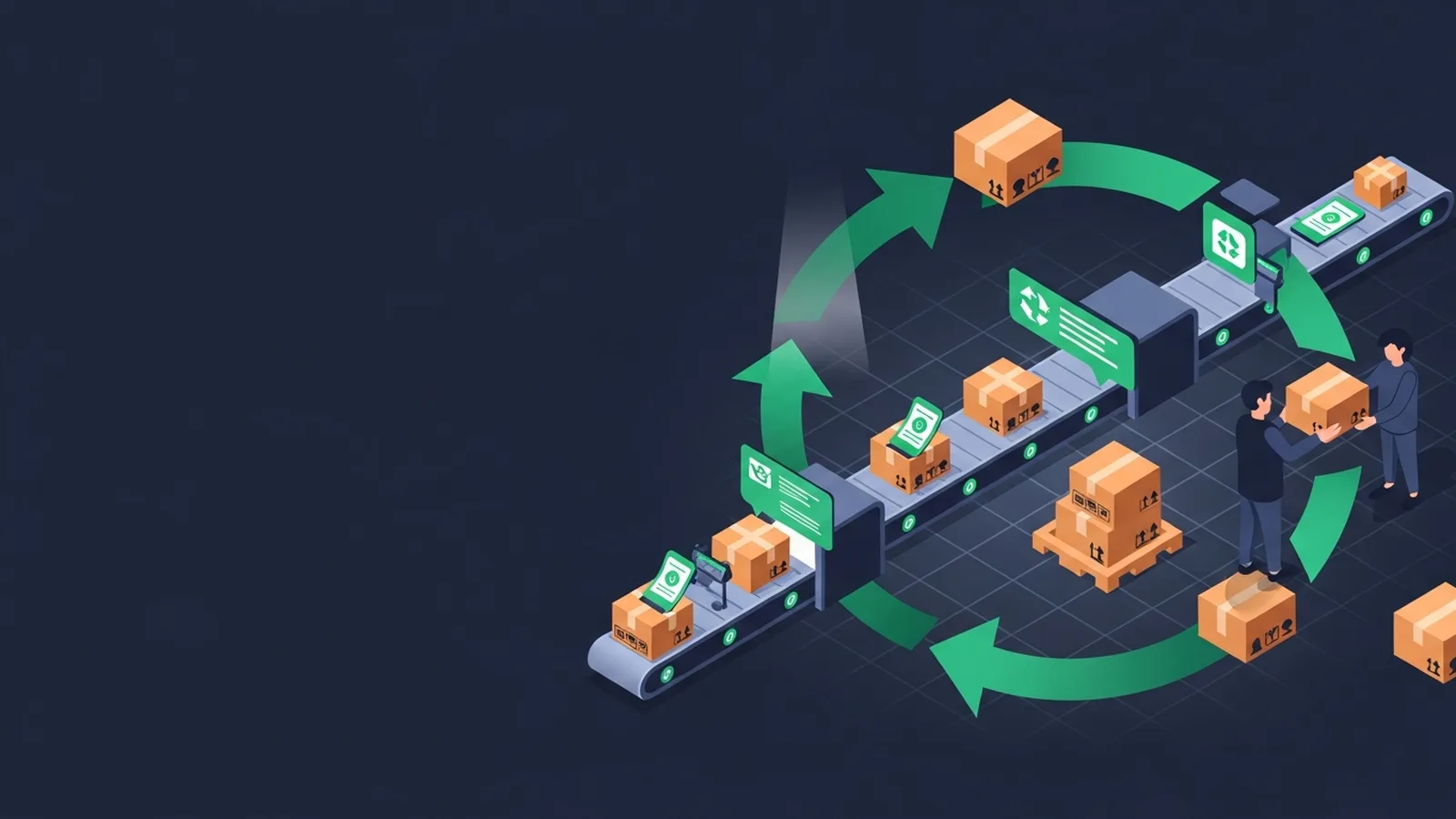
TL;DR: The best returns management software for Shopify handles the request, the approval decision and the return label in one portal, and makes an exchange easy to choose instead of a refund. Choose based on whether you prioritise exchange conversion (Loop), a paid post-purchase suite (AfterShip, Narvar), or a free returns portal with exchange incentives (Forthroute).
Last updated: September 2026
Returns cost Shopify stores two things: margin on the original sale and staff time processing each ticket. A good platform cuts the second cost. A great one reduces the first by making an exchange easy to choose instead of a refund.
Returns workflows — approvals, restocking, and label printing — take staff time that scales with order volume. Software can compress that if it applies your approval rules, issues return labels without CS intervention, and keeps the record in one place. Measure your own time per return before and after rather than trusting a vendor's figure.
This guide evaluates five platforms across four decision factors: automation depth, Shopify integration quality, cost structure, and logistics flexibility. You will know which tool fits your return volume, margin profile, and warehouse setup by the end.
Why Returns Software Matters for Shopify Merchants
Processing a return manually costs significant CS labour alone. Add inspection time, restocking delays, and the refund itself, and a single return can erase a large share of the original order's gross profit.
Software compresses the cycle and salvages margin through three mechanisms.
First, it shifts some customers from refunds to exchanges. A portal that offers an exchange alongside the refund converts a share of refund requests into exchanges. That preserves revenue and removes the need to reacquire the customer.
Second, it handles approval and label generation. Customers submit a request, the system checks eligibility against your policy rules, and a return label follows once the request is approved. No CS queue, no email back-and-forth.
Third, it keeps the return record in one place, so the state of every open return is visible without digging through email. Restocking itself differs by platform — ask when a returned unit goes back on sale and what triggers it, because the gap between platforms is where overselling and idle safety stock live.
Core Features Every Shopify Returns Platform Must Have
Any tool you evaluate should handle these five tasks without requiring custom code or Zapier bridges.
Automated Return Authorisation
The platform reads your policy (30 days, unworn tags, etc.), checks the order date and product eligibility, and marks qualifying requests approved while leaving the rest for review. Customers see the outcome in the portal. CS only touches exceptions like damaged goods or high-value items.
Label Generation Across Multiple Carriers
Check which carriers and regions the platform can issue return labels for, whether you can connect your own carrier account, and how label cost, markup and rounding are published. Bundled or prepaid labels change the total cost per return more than the software price does.
Exchange Incentives and Variant Swaps
Customers should be able to select a different size, colour, or product entirely. The portal calculates the price delta, charges or refunds the difference, and triggers a new fulfilment. Bonus credit (e.g., $5 toward an exchange) pushes the decision further away from refunds.
Inventory and Restocking
Ask each platform what happens to stock when a return comes back: whether the unit goes back on sale only after your team receives and inspects it, or on an earlier trigger, and exactly what that trigger is. This matters most for fast movers and limited drops, where a delay can mean a lost sale or an angry customer who ordered something you thought was in stock.
Analytics Dashboard
Track return rate by product, reason code frequency, and exchange rate. You need this data to spot quality issues (high return rate on one SKU suggests a defect) and measure how well your exchange incentives work.
Top Returns Management Platforms for Shopify
These five entries compare different constraints rather than a ranked field, and Returnly is retained only as historical context. Each optimises for something different.
- Loop Returns
- Returnly (discontinued)
- AfterShip Returns Center
- Narvar
- Forthroute
Loop Returns
Loop prioritises exchange conversion. Its published feature list includes store credit, Bonus Credit and a Shop Now flow that lets a customer choose a replacement during the return. The portal surfaces exchanges alongside the refund option.
Loop offers a free Checkout+ tier (returns software plus bundled US/Canada return shipping), with paid plans starting at $155/month (Essential) and $340/month (Advanced). Loop does not publish return-count caps or per-return overage fees. Loop lists Point of Sale support, so in-store and online returns can share the same workflow.
Best for: Apparel and accessories brands with strong repeat purchase rates, where an exchange is a natural next purchase.
Returnly (discontinued)
Returnly, acquired by Affirm in 2021, was sunset in October 2023 — Affirm wound the platform down and migrated its merchants to Loop Returns. [PYMNTS.com] It is no longer available to new stores, so it should not be on your shortlist today.
If you were drawn to Returnly for instant, pre-shipment refunds, Loop now offers the closest equivalent. We keep this entry only to redirect merchants who still see Returnly recommended in older guides.
AfterShip Returns Center
AfterShip is the budget option. It handles basic automation, label printing, and Shopify sync at $19/month or $192/year ($16/month equivalent) on its entry (Essentials) plan, which AfterShip publishes with an allowance of 240 returns per year and $0.50 per extra return. The interface is plain but functional. Customers submit a request, pick a reason, and get a label. You approve or reject from a queue.
AfterShip Returns offers a free trial but no permanent free plan — after the trial you pick a paid tier. Paid plans are Essentials ($19/month or $192/year, i.e. $16/month equivalent; AfterShip publishes an allowance of 240 returns per year with $0.50 per extra return, and describes the tier as being for growing stores with fewer than 100 returns a month) and Premium ($119/month or $1,188/year, i.e. $99/month equivalent; 1,200 returns per year with $1.00 per extra return, pitched at 100-400 returns a month), with custom Enterprise pricing above that.
Best for: Stores that want a low-cost, plain returns queue, and merchants selling low-return-rate products like consumables.
Narvar
Narvar combines returns with post-purchase tracking and delivery notifications. The platform sends branded emails at shipment milestones, which is designed to reduce WISMO (Where Is My Order) tickets. Returns live inside the same customer portal.
Pricing is enterprise-level and not published — Narvar quotes custom annual contracts. It is positioned for larger brands running several sales channels beyond Shopify; ask for the integration list and the contract term before comparing it with app-store pricing.
Best for: Omnichannel brands with physical retail, wholesale, and DTC. The unified tracking and returns experience works across all channels.
Forthroute
Forthroute is a free returns app for Shopify built around a branded self-service portal. The refund stays the default resolution and an exchange is offered alongside it with exchange incentives; approval rules mark routine requests approved; a platform prepaid label is billed through Shopify at carrier cost plus a 1% handling markup, rounded up to the next $0.10, while a label bought on your own connected carrier account is paid to that carrier — on the India Shiprocket lane, shipping leaves your own Shiprocket wallet and Forthroute charges US$0.10 through Shopify for each successful AWB, tracking number or label, even where no printable PDF is returned; printerless QR codes are available where the carrier supports them; and the merchant issues each refund in one click once a return is approved.
The portal offers a refund or an exchange, with exchange incentives you configure. Forthroute's software is $0, with no monthly fee, no subscription and no monthly return limit.
Best for: Merchants who want a free returns portal with an exchange offered alongside each refund, without paying for a returns platform.
Also worth a look: Two other platforms are worth knowing even though they are not profiled above. Return Prime is a widely used returns management app for Shopify stores. ReturnGO is a returns and exchanges management platform with a self-service portal and automation features.
How to Choose the Right Platform for Your Store
Run this decision tree. Your answers determine which tool fits.
Question 1: What is your monthly return volume? At low volumes AfterShip's entry plan stays cheap and Forthroute's $0 software is an easy fit. As volume grows, compare each platform's allowance, overage and label charges over one normal and one peak period rather than the headline price; enterprise suites like Narvar only make sense once the contract is small next to the labour it replaces.
Question 2: Do you want to push exchanges over refunds? Loop lists store credit across its plans and puts Bonus Credit and Instant Exchange on its Advanced tier. Forthroute keeps the refund as the default and offers an exchange alongside it with incentives you configure. AfterShip handles refunds and exchanges as part of its returns flow; check how prominently they appear in its portal.
Question 3: How many warehouses or 3PLs do you use? Ask each platform where returns can be sent and who restocks. Loop's plans list unlimited destinations; Narvar sells multi-node routing at enterprise pricing; Forthroute handles the request, approval and optional label, and leaves receiving and restocking to your warehouse or 3PL process.
Question 4: What is your average order value? The higher the order value, the more an exchange is worth compared with the refund it replaces, so weigh exchange features more heavily. At lower values the software and label cost per return decides.
Comparing the Top Five Platforms
| Platform | Starting Price | Return Volume Limit | Exchange features | Return destinations |
|---|---|---|---|---|
| Loop Returns | Free (Checkout+); $155/mo paid | Not publicly capped | Store credit across plans; Bonus Credit and Instant Exchange on Advanced | Unlimited destinations (published) |
| Returnly | Discontinued (Oct 2023) | — | — | — |
| AfterShip | $19/month or $192/year ($16/month equivalent) | 240 returns/year (Essentials), $0.50 per extra | Exchanges supported | Not published |
| Narvar | Custom (enterprise, not published) | Not published | Not published | Not published |
| Forthroute | $0 software | No monthly return limit | Exchange offered alongside each refund; incentives configurable | Your return address; restocking stays with your warehouse |
Implementation: What to Expect in the First 30 Days
Every platform follows a similar onboarding sequence. Plan for two weeks of setup and two weeks of customer education.
Week 1: Policy Configuration and Shopify Sync
You define return windows (30, 60, or 90 days), eligible product categories, and exception rules (final sale, custom items). The platform imports your order history and product catalogue from Shopify. Test the sync by processing a dummy return end to end, and confirm the order, product and return records line up on both sides.
Week 2: Portal Design and Carrier Integration
Customize the branded return portal with your logo, colours, and copy. Connect the carrier accounts the platform supports, or enable its prepaid labels, and set shipping rules. Generate test labels to verify rates and delivery estimates match your expectations.
Week 3: Customer Communication Rollout
Add the return portal link to your post-purchase emails, order confirmation page, and help center. Send an announcement to recent customers explaining the new self-service process. Monitor the support inbox for questions during the transition.
Week 4: Analytics Review and Policy Tuning
Check your exchange rate, average return processing time, and most common reason codes. Adjust exchange incentives (for example the size of the exchange incentive) or tighten policy rules (reduce return window for high-abuse categories) based on the data.
Common Mistakes When Choosing Returns Software
Three errors cost merchants money after they commit to a platform.
Mistake 1: Ignoring logistics costs in the total price. The subscription is rarely the biggest line; return shipping is, and every platform handles it differently. AfterShip publishes pre-negotiated carrier rates on its plans and charges per return above your allowance, Loop's Checkout+ tier bundles US and Canada return shipping, and Forthroute's software is $0 with platform prepaid labels billed through Shopify at carrier cost plus a 1% handling markup, rounded up to the next $0.10 — a label bought on your own connected carrier account is paid to that carrier instead, and on the India Shiprocket lane that shipping leaves your own Shiprocket wallet with a separate US$0.10 Forthroute fee billed through Shopify for each successful AWB, tracking number or label, even where no printable PDF is returned. Price one normal month and one peak month with labels included before you compare headline prices.
Mistake 2: Skipping the analytics review. If you can't see which SKUs drive returns or which reason codes appear most often, you can't fix the root problem. A platform without a dashboard leaves you blind to product quality issues and sizing inconsistencies.
Mistake 3: Overcomplicating the customer experience. Asking for photos, detailed written explanations, and serial numbers before approving a $30 return creates friction that drives customers away. Set a dollar threshold (e.g., auto-approve under $100) and only request evidence for high-value items.
How Forthroute Handles Returns Differently
Forthroute focuses on the step that protects margin: making an exchange easy to choose before the money leaves your business. The branded portal offers size and product swaps alongside the refund option, with exchange incentives, so customers who might have refunded can stay revenue.
It also removes friction from the mechanics of a return — optional prepaid labels (printerless QR codes where the carrier supports them), merchant-issued one-click refunds on approval, and approval rules — with $0 software cost, no subscription and no monthly return limit.
Most platforms let you set rules per product category, for example tightening the return window on high-abuse categories. In Forthroute, product exclusions and approval rules are configured per store, and the refund itself stays the merchant's one-click decision.
Measuring Success: Key Metrics to Track
Track these five numbers monthly to measure whether your returns platform delivers ROI.
Return rate: Total returns divided by total orders. Benchmark depends on category. A spike in return rate signals a product issue or unclear listing copy.
Exchange rate: Exchanges divided by total returns. A rising rate means your exchange option is working; a falling one means your portal design or incentive needs adjustment. State which way round you are counting before you compare one period with another.
Average return processing time: Days from return request submission to refund issuance. Pick one end point and keep it fixed, or you are comparing two different numbers. Compare your own before-and-after figures rather than vendor benchmarks; faster processing reduces customer complaints and chargebacks.
CS time per return: Total support time spent on returns divided by the number of returns. Measure it before and after the change. If the time per return does not fall, look at the mix of requests, the exceptions your rules do not cover, the setup itself and how you are measuring, before you conclude the rules are too narrow.
Return freight cost per return: Total return shipping expenses divided by the number of returns. Compare it with the margin on a typical order, since a return cancels the margin on at least one sale. If return freight eats a large share of that margin, negotiate better carrier rates or adjust your policy to shift costs to the customer.
Frequently Asked Questions
What is the best free returns management software for Shopify?
Forthroute is free to install and use — $0 software, no monthly fee, no subscription and no monthly return limit — which can suit merchants prioritising zero software fees, while checking workflow fit. AfterShip offers a free trial rather than a permanent free plan (Essentials then starts at $19/month or $192/year ($16/month equivalent)). Shopify's built-in returns tools cover the basics — return rules, return labels and exchanges — and a dedicated app adds a branded self-service portal and, in Forthroute's case, exchange incentives.
How much does returns management software cost for Shopify?
Pricing ranges from $19/month or $192/year ($16/month equivalent) for a basic returns queue (AfterShip Essentials) to custom enterprise contracts for platforms like Narvar (not published). Loop starts free on its Checkout+ tier, with paid plans from $155/month; Forthroute's software is $0. AfterShip charges $0.50–$1.00 per return above your plan limit; Loop does not publish per-return overage fees. Forthroute charges nothing merely for creating a return request. A platform prepaid label — one Forthroute buys for you — is billed through Shopify at carrier cost plus a 1% handling markup, rounded up to the next $0.10. On the India lane, where you connect your own Shiprocket account, shipping is paid from your own Shiprocket wallet and Forthroute charges US$0.10 through Shopify when an AWB, tracking number or label is successfully generated, even where no printable PDF is returned. This US$0.10 fee describes the merchant-owned Shiprocket flow; for any other carrier account you connect, check what that lane bills before you rely on it.
Can returns software reduce my refund rate?
Yes, if it makes the exchange easy to choose. Loop lists store credit across its plans and puts Bonus Credit on its Advanced tier, surfacing exchanges alongside the refund option. Forthroute offers an exchange alongside the refund with incentives you configure, while the refund stays the default. How many refund requests convert depends on your products and customers. AfterShip supports refunds and exchanges as part of its returns flow.
Do I need returns software if my return rate is under 5%?
Not necessarily. If you process only a handful of returns a month, manual handling through Shopify's built-in tools or email may be faster than learning new software. As volume grows, the CS time a portal and approval rules save starts to justify a paid plan — or a $0-software option like Forthroute.
How does returns software integrate with Shopify?
All major platforms install as Shopify apps and read your order and product data from Shopify. Customers access the return portal through a link in their order confirmation email or your store's help center. Refunds and restocking then run through Shopify; check whether the platform triggers them or leaves them to you — in Forthroute the refund is a one-click merchant action.
What happens if a customer returns a product that is out of stock?
Platforms differ on when a returned unit goes back on sale, so ask each one what triggers the restock and whether an incoming unit can be promised to a new order. In Forthroute the return shipment is tracked, and receiving, inspection and restocking stay with your warehouse process.
Can I customise the return policy rules for different product categories?
Yes. Most platforms let you set separate return windows, eligibility rules, and exchange incentives per product type. For example, you might offer 60-day returns on apparel but 14 days on electronics, or allow exchanges on all items except final sale merchandise. Configure these rules during onboarding and adjust them based on your analytics data.
Choosing returns software is a margin decision, not a convenience upgrade. The right platform cuts processing time, preserves revenue through exchanges, and keeps the return record in one place. Evaluate your return volume, warehouse setup, and exchange goals, then pick the tool that removes the steps that cost you the most. Forthroute keeps the software cost at $0 for Shopify merchants, while Loop and AfterShip serve merchants at different price points.
Run Shopify returns in a branded portal you control — Forthroute, no subscription or monthly return limit.
What is the best returns management software for Shopify?
The best returns management software for Shopify handles the request, the approval decision and the return label in one portal, and makes an exchange easy to choose instead of a refund. Forthroute runs the return request, approval-rule and optional-label steps for Shopify brands, with an exchange offered alongside each refund and the refund issued by the merchant in one click, so returns stop quietly eating both margin and customer-service hours.
About the Author

Hylke Reitsma is co-founder of Forthsuite and a supply chain specialist with 8+ years of hands-on experience at Shell, Verisure, and Stryker. He holds an MSc in Supply Chain Management from the University of Groningen and writes practical guides to help e-commerce teams run leaner, faster supply chains. Selected by Replit as 1 of 20 founders for the inaugural Race to Revenue Cohort #1 (2026) and certified as a Replit Platform Builder.
LinkedIn