Shopify Reverse Logistics: Return-to-Warehouse Guide
Shopify Reverse logistics: How returned orders flow back to your warehouse or 3PL — pickups, sortation, restocking, and the SLAs that keep refund times under 5 days.
Hylke Reitsma is co-founder of Forthsuite and a supply chain specialist with 8+ years of hands-on experience at Shell, Verisure, and Stryker. He holds an MSc in Supply Chain Management from the University of Groningen and writes practical guides to help e-commerce teams run leaner, faster supply chains. Selected by Replit as 1 of 20 founders for the inaugural Race to Revenue Cohort #1 (2026) and certified as a Replit Platform Builder.
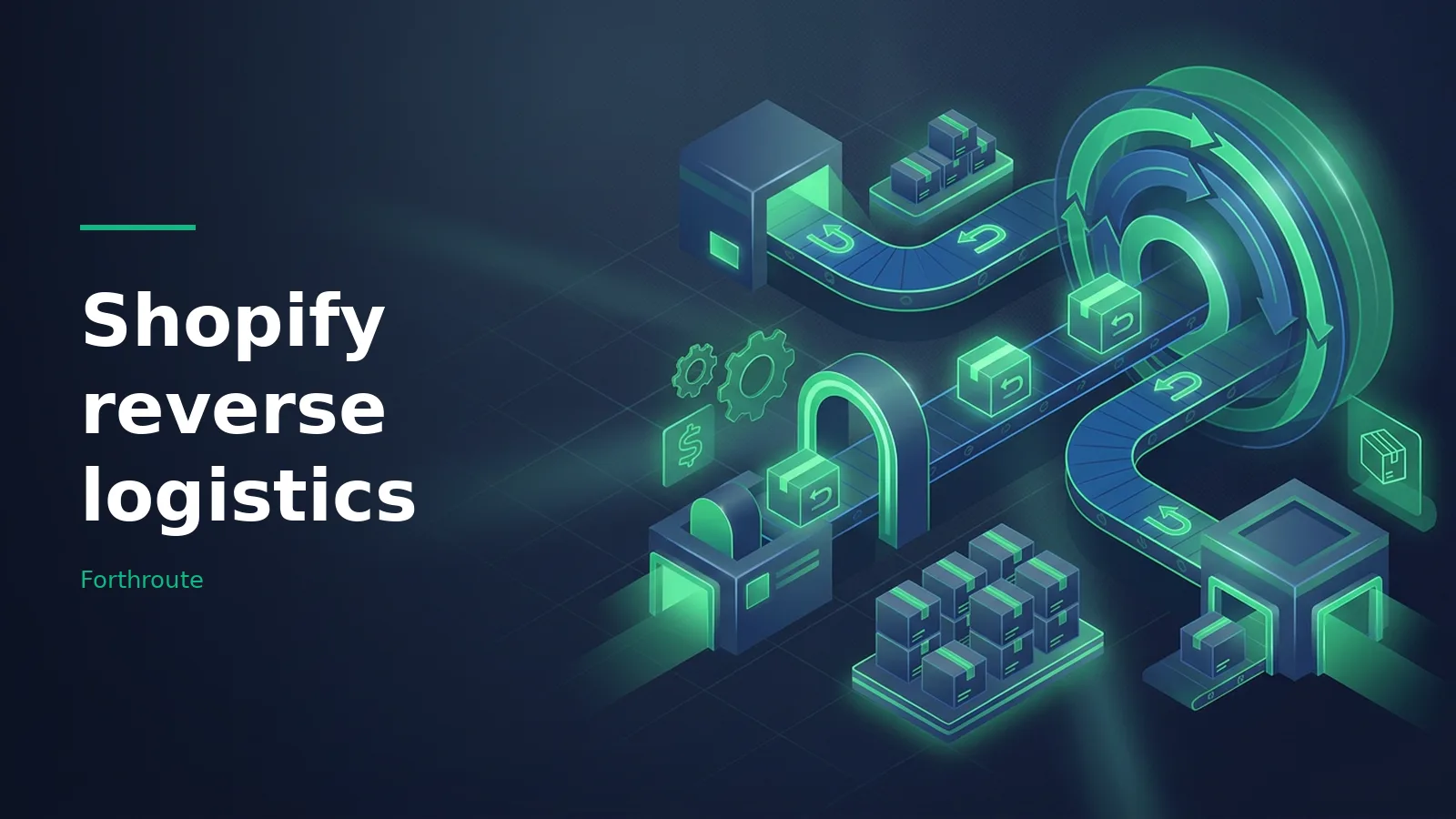
Return-to-Warehouse Logistics for Shopify: The Operator's Playbook
TL;DR: Return-to-warehouse logistics for Shopify involves managing the flow of returned orders back to your warehouse or 3PL through coordinated pickups, sortation, and restocking processes with service-level agreements that keep refund times under five days. Forthroute streamlines reverse logistics for Shopify brands by automating returns, RMA processing, refunds, and exchanges from customer initiation through warehouse restocking.
Last updated: July 2026
TL;DR. How returned orders flow back to your warehouse or 3PL — pickups, sortation, restocking, and the SLAs that keep refund times under 5 days.
If you operate returns at scale on Shopify, this guide is one of 25 spokes inside the Shopify Returns Management Hub — start with the pillar for the operator-level overview, then come back here for the deep dive on return to warehouse logistics ecommerce. The short answer to "How does return-to-warehouse logistics work for a Shopify brand?": work the framework below, ship the policy wording, and instrument the metric we call out at the end.
Reverse logistics 101
Reverse logistics 101 is a load-bearing step. The Forthroute team works with Shopify brands on returns, and this is the version of the playbook that survives contact with peak season.
Use the rule set below as your default and adjust the thresholds for your category and AOV.
- Define the input you actually have (Shopify order data, return reason, customer cohort).
- Pick a default rule that handles 70% of cases without human review.
- Write the customer-facing wording before you write the rule — the wording is the product.
- Instrument the conversion (refund-to-exchange, repeat-return rate, refund cycle time).
Carrier pickup vs drop-off
Carrier pickup vs drop-off is a load-bearing step. The Forthroute team works with Shopify brands on returns, and this is the version of the playbook that survives contact with peak season.
Use the rule set below as your default and adjust the thresholds for your category and AOV.
- Define the input you actually have (Shopify order data, return reason, customer cohort).
- Pick a default rule that handles 70% of cases without human review.
- Write the customer-facing wording before you write the rule — the wording is the product.
- Instrument the conversion (refund-to-exchange, repeat-return rate, refund cycle time).
Sortation + grading at the dock
Sortation + grading at the dock is a load-bearing step. The Forthroute team works with Shopify brands on returns, and this is the version of the playbook that survives contact with peak season.
Use the rule set below as your default and adjust the thresholds for your category and AOV.
- Define the input you actually have (Shopify order data, return reason, customer cohort).
- Pick a default rule that handles 70% of cases without human review.
- Write the customer-facing wording before you write the rule — the wording is the product.
- Instrument the conversion (refund-to-exchange, repeat-return rate, refund cycle time).
Restock vs liquidation decision tree
Restock vs liquidation decision tree is a load-bearing step. The Forthroute team works with Shopify brands on returns, and this is the version of the playbook that survives contact with peak season.
Use the rule set below as your default and adjust the thresholds for your category and AOV.
- Define the input you actually have (Shopify order data, return reason, customer cohort).
- Pick a default rule that handles 70% of cases without human review.
- Write the customer-facing wording before you write the rule — the wording is the product.
- Instrument the conversion (refund-to-exchange, repeat-return rate, refund cycle time).
3PL SLA contract clauses
3PL SLA contract clauses is a load-bearing step. The Forthroute team works with Shopify brands on returns, and this is the version of the playbook that survives contact with peak season.
Use the rule set below as your default and adjust the thresholds for your category and AOV.
- Define the input you actually have (Shopify order data, return reason, customer cohort).
- Pick a default rule that handles 70% of cases without human review.
- Write the customer-facing wording before you write the rule — the wording is the product.
- Instrument the conversion (refund-to-exchange, repeat-return rate, refund cycle time).
FAQ
How does return-to-warehouse logistics work for a Shopify brand?
Yes — and the framework above gives you the operator answer in under 700 words. How returned orders flow back to your warehouse or 3PL — pickups, sortation, restocking, and the SLAs that keep refund times under 5 days.
How does this affect refund cycle time on Shopify?
Most operators see refund cycle time drop from 7-9 days to 3-5 days once the rules above are in place. The biggest single lever is auto-approval for low-risk, low-value returns.
Does Forthroute support return to warehouse logistics ecommerce natively?
Yes. Forthroute ships with the rule engine, customer portal, and Shopify-native integration the framework above assumes. Pricing is free — see pricing.
Where does this fit in the broader Returns Management Hub?
This spoke is one of 25 inside the Shopify Returns Management Hub. The pillar covers the full operator overview; come back to this spoke when you specifically need to solve return to warehouse logistics ecommerce.
Next step
If you want the full operator playbook across all 25 spokes, the Shopify Returns Management Hub stitches them together. If you want to ship this in one afternoon on Shopify, install Forthroute — it's free.
Setting up a return intake schedule that works with your 3PL
One of the fastest ways to bottleneck return-to-warehouse logistics is misalignment between when customers ship items back and when your 3PL or warehouse team has dock capacity to receive them. Most Shopify brands operate on weekly or bi-weekly intake windows, not continuous intake.
This is intentional: it lets you batch-sort incoming returns, run quality checks in one pass, and update your inventory system without constant SKU churn.
Start by asking your logistics partner or warehouse manager: what days and times do they have dedicated dock staff for returns? Many 3PLs carve out Tuesday through Thursday mornings. Then, in your return portal or email communication, tell customers which carrier to use and which dates are preferred for their shipment. You don't need to block other dates, but you can add language like "items received by Thursday will be processed and refunded by end of business Friday." This sets a clear SLA and gives your team a realistic window for sortation, grading, and payment initiation.
If your returns volume is uneven—spikes after a sale, lulls mid-month—ask your 3PL about flex intake days. Some offer discounted rates or faster processing if you pre-notify them of volume surges. Even a 48-hour heads-up often helps them schedule additional staff.
Automating return label generation and tracking transparency
Customers who don't have a clear, simple way to initiate a return often delay. Delays mean items sit in customer homes, risk being lost, and push your refund cycle further out.
A returns management platform like Forthroute automates label generation: the customer approves the return, clicks "generate label," and receives a branded QR code or PDF they can print or use on their phone at the carrier location. This reduces friction and gives you immediate, trackable shipment data.
Make sure your return labels are branded and include your return address, an RMA number, and a link to a tracking page where customers can see the status of their return. Many Shopify merchants underestimate how much trust and repeat purchase intent grow when a customer can watch their return move from "shipped" to "received at warehouse" to "refund processed." That visibility also reduces support tickets—fewer emails asking "where is my refund?" because customers have real-time confirmation.
On the backend, integrate your return carrier data with your warehouse or 3PL system so that when a return package arrives, staff can scan the RMA and immediately flag it in your intake checklist. This cuts the time from dock receipt to sortation.
Why grading criteria vary by product category—and how to document yours
A return of a winter coat with a loose button is graded differently than a return of a phone charger. Before you build your sortation and restock criteria, spend time writing category-specific grading rules.
"Acceptable for restock" might mean different things for apparel (minor wrinkles, original tags, no odor) versus home goods (no damage to packaging, no stains, no assembly marks) versus electronics (original box, all accessories, no signs of use).
Document these rules in a one-page checklist your warehouse team can reference at the dock. Include photos of acceptable vs. unacceptable condition examples. This prevents inconsistency: one person restocking a shirt with a small flaw while another person liquidates an identical shirt. Consistency protects both your inventory accuracy and your brand reputation if a customer receives a return-grade item thinking it's new.
What happens to returns that don't meet restock standards?
Not every return goes back to your sales inventory. Items that fail your grading criteria—visible wear, defects that appeared post-purchase, or items you intentionally don't want to restock—need a liquidation path.
Common options include wholesale discount bins, secondary marketplaces, donation for tax write-off, or material recycling. Decide this before returns arrive. If you don't have a liquidation partner, returns can pile up at your warehouse, tying up space and creating decision fatigue.
Some Shopify brands allocate a small percentage of revenue to liquidation infrastructure (a partner, a marketplace shelf, or a donation relationship) as part of their return cost. It's cheaper than warehousing unsellable inventory.
Run Shopify returns in a branded portal you control — Forthroute, no subscription or monthly return limit.
About the Author

Hylke Reitsma is co-founder of Forthsuite and a supply chain specialist with 8+ years of hands-on experience at Shell, Verisure, and Stryker. He holds an MSc in Supply Chain Management from the University of Groningen and writes practical guides to help e-commerce teams run leaner, faster supply chains. Selected by Replit as 1 of 20 founders for the inaugural Race to Revenue Cohort #1 (2026) and certified as a Replit Platform Builder.
LinkedIn