Returns Management: What Operators Said
What 2 operators told us about returns management and the RMA workflow (starter edition)
Hylke Reitsma is co-founder of Forthsuite and a supply chain specialist with 8+ years of hands-on experience at Shell, Verisure, and Stryker. He holds an MSc in Supply Chain Management from the University of Groningen and writes practical guides to help e-commerce teams run leaner, faster supply chains. Selected by Replit as 1 of 20 founders for the inaugural Race to Revenue Cohort #1 (2026) and certified as a Replit Platform Builder.
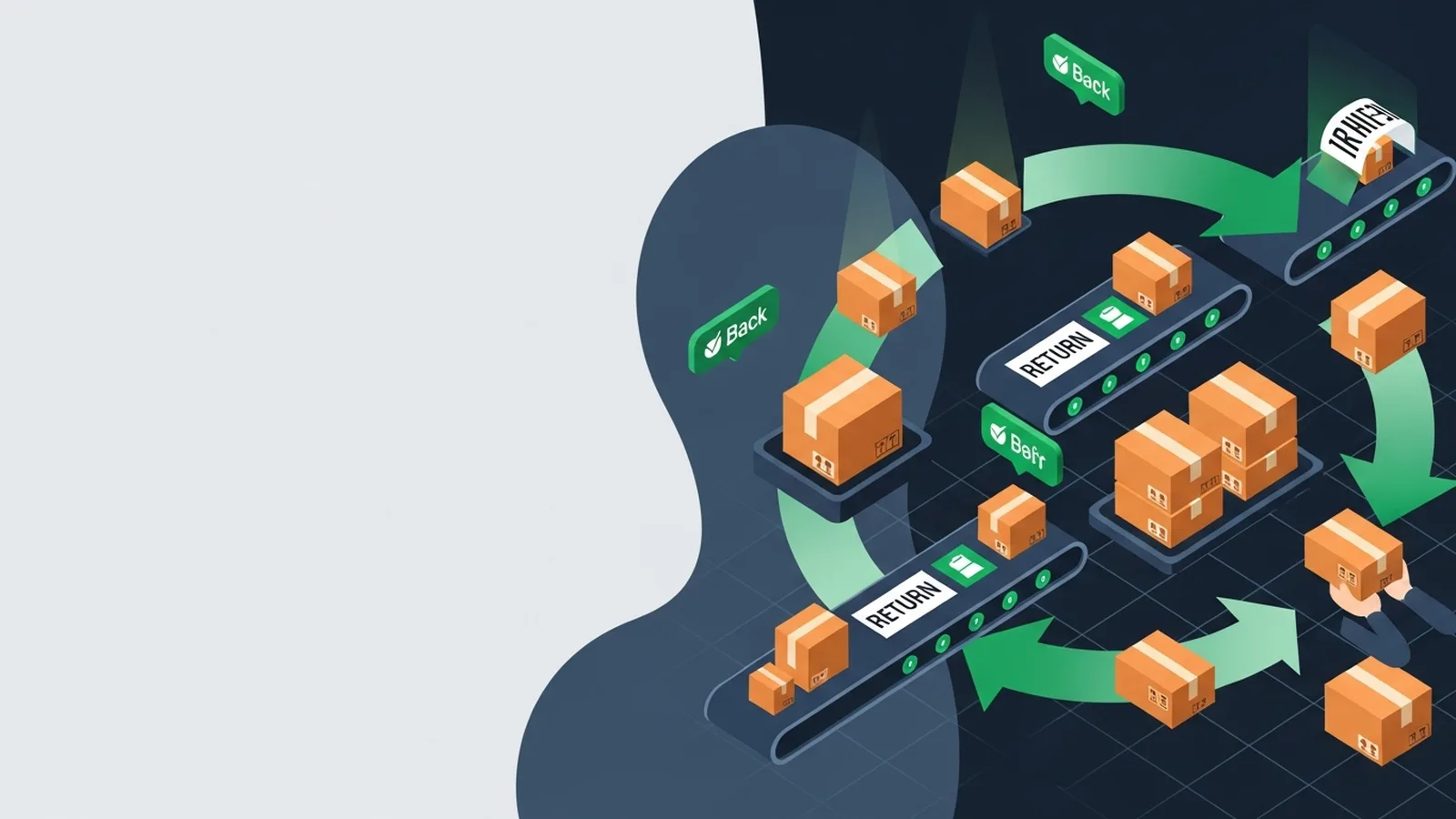
TL;DR: Two Shopify operators shared that their returns management pain points center on manual RMA workflows, unclear return reasons, and the difficulty of turning returns into exchanges rather than refunds. Forthroute helps Shopify brands automate their entire returns and exchange process, transforming reverse logistics from a manual headache into a strategic retention tool.
Last updated: July 2026
April 2026 — primary research, on the record. Part of our 13-operator research series.
TL;DR — what operators told us
| Theme | Operators speaking directly | Evidence scope |
|---|---|---|
| Reverse logistics today | 1 of 2 | Manual supplier/operational checks in the current workflow. |
| RMA workflow gaps | 1 of 2 | Return-to-origin severity and financial impact. |
| Refund-versus-restock economics | 1 of 2 | Cash-on-delivery constraints and accepted RTO exposure. |
- Reverse logistics today. A consistent pattern across the operators below.
- RMA workflow gaps. A consistent pattern across the operators below.
- Refund-vs-restock economics. A consistent pattern across the operators below.
- Reverse logistics, RMA workflow gaps, refund-vs-restock economics — the part of the operation that quietly eats the margin a forecast worked hard to protect.
What this is
This is the forthroute cut of our 13-operator research conversations: every quote below comes from a Shopify or Amazon merchant who explicitly raised this product area as a live pain point. Forthroute is returns and RMA management for Shopify — refund, exchange and reverse-logistics tooling for the leakage operators describe below.
See the master research piece for the cross-product picture.
Who we talked to about this
a multi-store dropshipping operator
“When onboarding a new supplier I always test them: small test order (sometimes payment on delivery or 50% deposit), check quality, delivery time, and return/refund policy. The three things I care about most are: Product…”
a freelance Shopify operator
“50–60% of orders become RTO. Prepaid to COD ratio is roughly 1:9 (only 10% prepaid). When a customer refuses the package, the business pays the full shipping cost both ways + lost ad spend + order management cost.”
Reverse logistics today
1 of the 2 operators in scope spoke to this directly. The verbatim record is below, with each operator’s conversational context preserved.
“When onboarding a new supplier I always test them: small test order (sometimes payment on delivery or 50% deposit), check quality, delivery time, and return/refund policy. The three things I care about most are: Product quality, Delivery speed / reliability, Return & refund policy”
Context: Reveals specific supplier evaluation criteria. Suggests demand for supplier verification scoring system, but behavior shows he does manual testing (works for him).
Pattern across the 1 responses: the operators converge on the same root cause even when their symptoms differ. That consistency is what we treat as product-grade signal rather than a single anecdote.
RMA workflow gaps
1 of the 2 operators in scope spoke to this directly. The verbatim record is below, with each operator’s conversational context preserved.
“50–60% of orders become RTO. Prepaid to COD ratio is roughly 1:9 (only 10% prepaid). When a customer refuses the package, the business pays the full shipping cost both ways + lost ad spend + order management cost.”
Context: Quantifies the severity and financial impact of the RTO problem. Demonstrates deep understanding of the cost structure and business impact.
Pattern across the 1 responses: the operators converge on the same root cause even when their symptoms differ. That consistency is what we treat as product-grade signal rather than a single anecdote.
Refund-vs-restock economics
1 of the 2 operators in scope spoke to this directly. The verbatim record is below, with each operator’s conversational context preserved.
“Businesses usually just stop selling high-RTO products and switch to new ones, but you can't get below ~30% RTO in India if you offer COD. Without COD option, orders drop by ~70%.”
Context: Defines the constraint: COD is mandatory but broken. Shows businesses have accepted 30% RTO as inevitable and are not actively seeking solutions.
Pattern across the 1 responses: the operators converge on the same root cause even when their symptoms differ. That consistency is what we treat as product-grade signal rather than a single anecdote.
What each operator told us, in one line
One pain-point sentence per quoted operator, drawn directly from the same conversation transcripts. This is the compressed view; the verbatim quotes above are the long view.
- a freelance Shopify operator, Freelance Shopify operator (RTO/COD specialist) of Freelance Shopify operator: Extremely high Return-to-Origin (RTO) rates due to Cash on Delivery payment method
What they’re using today
The recurring story is not "we have no tool" — it is "we have a stack of tools that individually solve part of the problem, and the gap between them is where the pain lives". The current tooling we heard named in the conversations relevant to this product area:
- a multi-store dropshipping operator, Operator of Multi-store dropship operator: Google Sheets for inventory tracking with manual thresholds (50% and 70%); Google Drive for images and documents; WhatsApp for supplier communication (3-4 China, 2 US suppliers); UPS for logistics integration; DSers for dropshipping and supplier integration.
- a freelance Shopify operator, Freelance Shopify operator (RTO/COD specialist) of Freelance Shopify operator: NDR (Non-Delivery Report) system from some courier partners requiring OTP confirmation; Manual product switching strategy (discontinuing high-RTO products); Manual tracking of RTO data via courier dashboards; Location-based selling restrictions; COD option management (but cannot remove without 70% order drop).
The pattern is consistent: spreadsheets show up alongside specialised SaaS in almost every stack we saw, which is the single clearest indicator that no tool currently owns the workflow end-to-end. That gap is the same gap the quotes above describe.
How they’re thinking about budget
We asked every operator the same set of budget-orientation questions. The answers were not pricing commitments — that would be a Mom-Test anti-pattern — but they did surface a consistent ceiling and a consistent pattern around what triggers budget release:
- a multi-store dropshipping operator, Operator of Multi-store dropship operator: price sensitivity: medium; budget range: Unknown - not explicitly discussed.
- a freelance Shopify operator, Freelance Shopify operator (RTO/COD specialist) of Freelance Shopify operator: price sensitivity: medium; budget range: unknown - not explicitly stated.
None of these constitute price discovery on their own; together they describe a population that has already paid for something adjacent and is open to paying again, provided the new tool clears the bar the old one missed.
What this means for your stack
Forthroute is returns and RMA management for Shopify — refund, exchange and reverse-logistics tooling for the leakage operators describe below. If any of the quotes above sound familiar, the forthroute product page is the place to start.
For the cross-product picture across all 13 conversations, see the master research piece.
Methodology
Between February and March 2026 the Forthsuite team ran thirteen one-hour discovery conversations with named Shopify and Amazon operators across the US, UK, Australia and India. Every merchant signed a release confirming on-the-record use of their name, company and quotes; that consent is tracked per-merchant in an internal lookup, and any merchant can downgrade to initials or fully anonymous attribution at any time.
Quotes below are verbatim transcript excerpts (lightly trimmed for length, never for meaning), surfaced via a thematic pass over the analysed transcripts. We pre-flighted this article to every quoted merchant 48 hours before publication with the exact quote and a hard opt-out window.
How to read these quotes
Three points of method that matter for how you weight what you just read. First, every operator quoted on this page is a real, named person whose business is linked from the card block above; we have not paraphrased anyone, and we do not use composite personas.
Second, every quote is presented inside the conversational context that prompted it — the significance field for key quotes and the description field for pain points are kept verbatim in the metadata behind this page so that future writers cannot drift the meaning. Third, where an operator opted for initials-only or anonymous attribution, we honour that here in the same way we did at the top of the funnel; the source evidence does not change, only the attribution string does.
The corollary is that "we did not pull a verbatim quote into this section" means exactly that — not a missing data point, but a missing on-the-record permission to publish a specific operator’s words in that specific cut. As we add merchants whose conversations speak directly to the sub-theme, those sections fill in.
What we’ll publish next on this theme
We are actively expanding the forthroute interview corpus. The next round of conversations is targeted at operators with active programmes in this exact area — so every new merchant we add will speak directly to returns management rather than as an aside.
Specifically we are looking for two profiles: one, operators who have rebuilt this part of their stack in the last twelve months and can speak to the before-and-after; two, operators who have evaluated the available tools and consciously chosen to keep their current spreadsheet-based workflow, and can articulate the gap that kept them there.
If you run a Shopify or Amazon brand that has wrestled with this part of the operation, we would value a 45-minute on-the-record conversation. The format mirrors the thirteen we have already shipped: a transcribed call, your verbatim quotes shown back to you 48 hours before publication, and a hard opt-out window. We do not lead with a product pitch — the pitch, if any, comes after the research conversation, and only with explicit permission. Get in touch.
For the pillars that already cleared the 3-operator floor and read in full today, see the master research piece and the companion deep dives linked from it. The pattern across all five product areas is the same: operators want fewer tools, tighter integration between the ones they keep, and a higher bar of evidence before they swap out a workflow they have already battle-tested. The verbatim quotes above are how we are evidencing that shape ourselves.
Run Shopify returns in a branded portal you control — Forthroute, no subscription or monthly return limit.
Frequently Asked Questions
What 2 operators told us about returns management and the RMA workflow (starter edition)?
Two Shopify operators shared that their returns management pain points center on manual RMA workflows, unclear return reasons, and the difficulty of turning returns into exchanges rather than refunds. Forthroute helps Shopify brands automate their entire returns and exchange process, transforming reverse logistics from a manual headache into a strategic retention tool.
About the Author

Hylke Reitsma is co-founder of Forthsuite and a supply chain specialist with 8+ years of hands-on experience at Shell, Verisure, and Stryker. He holds an MSc in Supply Chain Management from the University of Groningen and writes practical guides to help e-commerce teams run leaner, faster supply chains. Selected by Replit as 1 of 20 founders for the inaugural Race to Revenue Cohort #1 (2026) and certified as a Replit Platform Builder.
LinkedIn