What Actually Happens to the Stuff You Return Online?
You click 'return,' the refund lands, and the item disappears. But it doesn't go back on the shelf nearly as often as you'd assume.
Hylke Reitsma is co-founder of Forthsuite and a supply chain specialist with 8+ years of hands-on experience at Shell, Verisure, and Stryker. He holds an MSc in Supply Chain Management from the University of Groningen and writes practical guides to help e-commerce teams run leaner, faster supply chains. Selected by Replit as 1 of 20 founders for the inaugural Race to Revenue Cohort #1 (2026) and certified as a Replit Platform Builder.
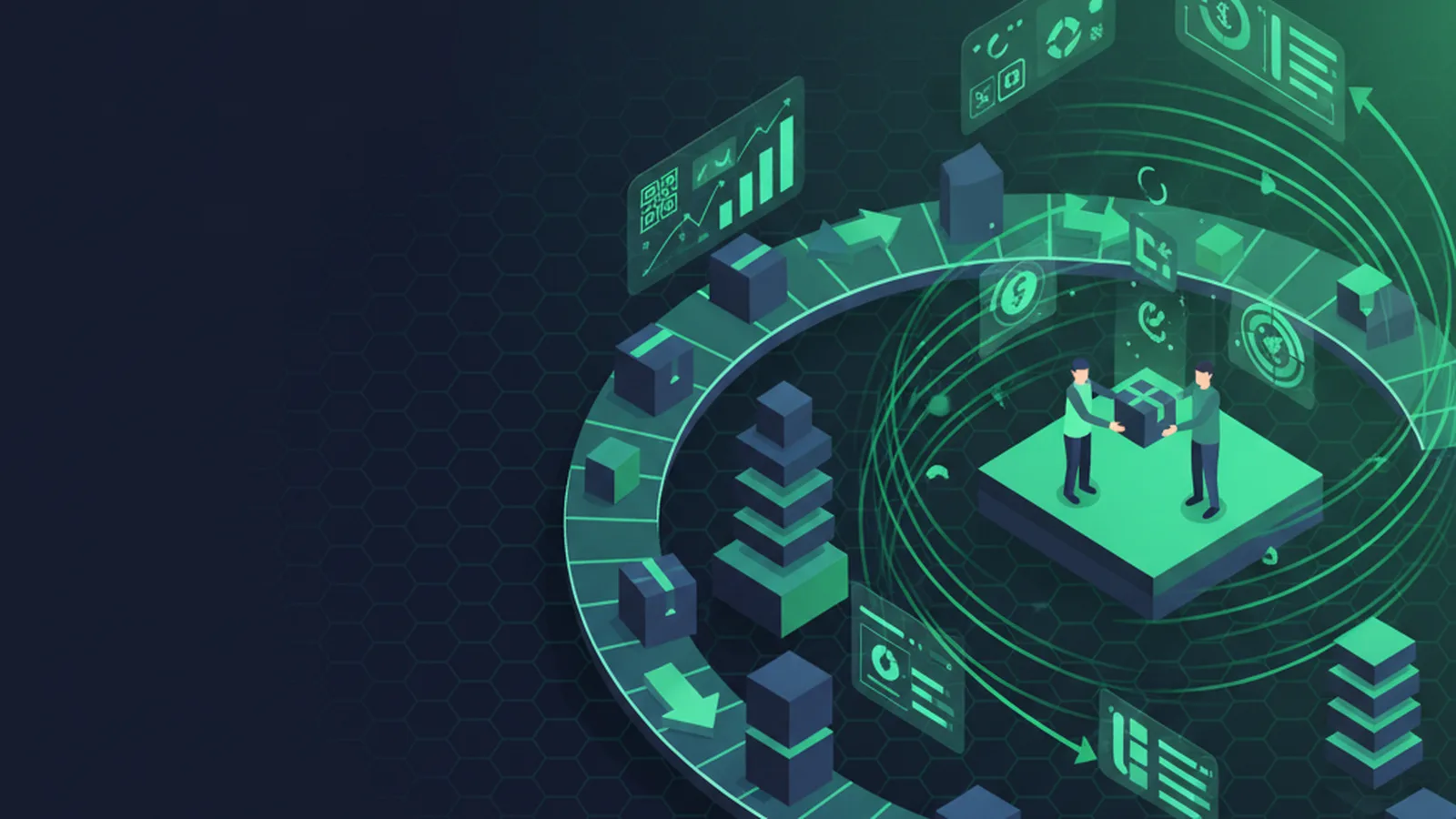
TL;DR: A returned item usually does not go back on the shelf. Receiving, inspecting, testing, cleaning, repackaging, and relisting a return often costs more than the item is worth once it is open-box, so retailers send returns down one of three roads instead: resold as open-box or liquidated by the pallet, handed to a third party to sort and grade, or destroyed.
Last updated: July 2026
You order two sizes, keep one, and send the other back. You click "return," print the label, drop the box at the counter, and a few days later the refund quietly appears. From your side, the story ends there.
From the retailer's side, it's just beginning — and where that box goes next is a lot stranger, and more wasteful, than most shoppers ever realize.
The shelf is the least likely destination
The intuitive assumption is that your returned item gets inspected, repackaged, and put back up for sale. Sometimes it does.
But "straight back to the shelf" is often the exception, not the rule — especially for cheaper goods.
Here's the uncomfortable economics: processing a single return — receiving it, inspecting it, testing it, cleaning it, repackaging it, relisting it — costs real money and real labor. For a lot of products, that handling cost is higher than the item is worth once it's "open box." So the item never makes it back to the shelf, because doing so would lose the retailer money.
Instead, your return usually takes one of a few other paths.
The three roads a return actually takes
1. Resold as "open box" or liquidated. Good-condition returns often get bundled and sold off — to discount outlets, to resellers, or by the pallet into the liquidation market. (Yes, the same mystery pallets people buy online are stuffed with other people's returns.) The item gets a second life, just not at full price and not from the original store.
2. Sent to a third party to be dealt with. Many retailers don't process returns in-house at all. The reverse-logistics handling — sorting, grading, deciding restock-vs-liquidate-vs-bin — gets outsourced. Your box may never touch the store you bought from.
3. Destroyed. This is the part that surprises people. Some returned goods end up in landfill or destroyed, simply because reselling them costs more than they'd recover. Perfectly functional products, trashed on a spreadsheet's say-so.
"Free returns" was never free
The phrase trained a generation of shoppers to treat their cart like a fitting room: order five, keep one, send four back, no consequences. But the cost didn't disappear — it got absorbed, and then quietly redistributed.
That's why you've started seeing the backlash: restocking fees creeping back, "final sale" labels spreading, return windows shrinking, and "keep it, here's your refund" offers (which exist precisely because handling the return costs more than the product). Free returns were a customer-acquisition subsidy, and the subsidy is being clawed back.
The hidden mountain behind the click
Step back and the scale is staggering. Online return rates run higher than in-store because you genuinely can't tell if something fits or feels right until it arrives.
Multiply that by the volume of everything bought online, and returns become one of the largest, least-visible logistics problems in retail. An entire reverse supply chain exists just to absorb the stuff we change our minds about.
For the store, every return is a small, expensive decision tree: restock, resell, recycle, or bin — fast, and at scale, across thousands of items a day. Getting that decision right is the difference between a return being a recoverable asset and a pure loss. That's the unglamorous problem Forthroute works on: helping merchants route each return to its best outcome instead of defaulting to the most wasteful one.
So next time your refund lands and the box disappears, know that it didn't disappear at all. It just entered a second, hidden economy — the one that runs entirely on our second thoughts.
About the Author

Hylke Reitsma is co-founder of Forthsuite and a supply chain specialist with 8+ years of hands-on experience at Shell, Verisure, and Stryker. He holds an MSc in Supply Chain Management from the University of Groningen and writes practical guides to help e-commerce teams run leaner, faster supply chains. Selected by Replit as 1 of 20 founders for the inaugural Race to Revenue Cohort #1 (2026) and certified as a Replit Platform Builder.
LinkedIn