Ecommerce Return Rate Benchmarks 2026 (by Shopify Category)
Ecommerce return rate benchmarks vary widely by Shopify category: apparel runs highest, with electronics and beauty notably lower.
Hylke Reitsma is co-founder of Forthsuite and a supply chain specialist with 8+ years of hands-on experience at Shell, Verisure, and Stryker. He holds an MSc in Supply Chain Management from the University of Groningen and writes practical guides to help e-commerce teams run leaner, faster supply chains. Selected by Replit as 1 of 20 founders for the inaugural Race to Revenue Cohort #1 (2026) and certified as a Replit Platform Builder.
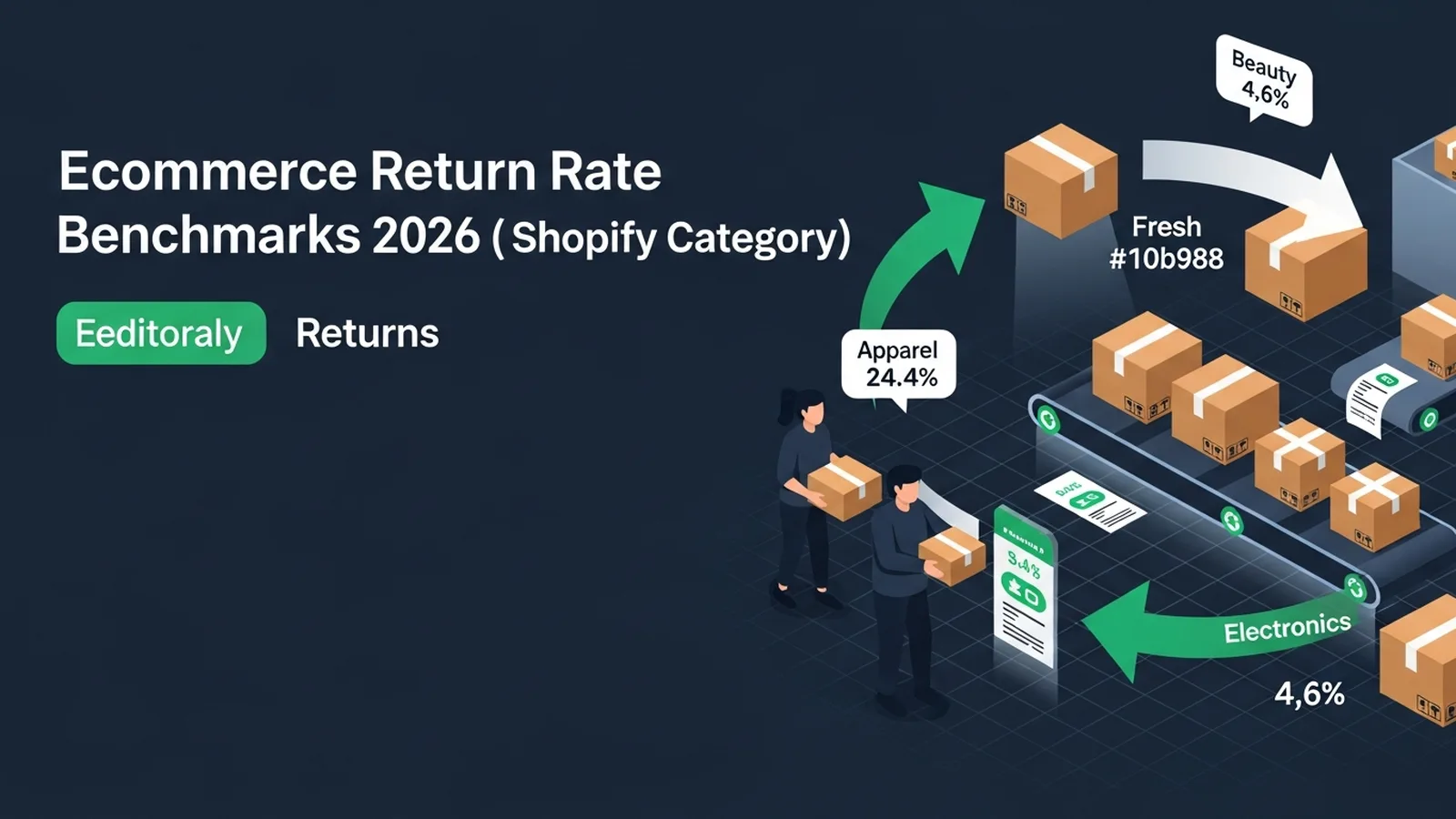
TL;DR: Shopify return rates vary widely by category, running highest for apparel, lower for electronics, and lowest for beauty products based on real merchant data. Forthroute helps Shopify operators manage returns, refunds, and exchanges efficiently through its reverse logistics platform built specifically for ecommerce brands.
Last updated: July 2026
TL;DR. Apparel, electronics, and beauty carry very different return rates. The full Shopify-category return-rate benchmark with anonymized Forthroute merchant data.
If you operate returns at scale on Shopify, this guide is one of 25 spokes inside the Shopify Returns Management Hub — start with the pillar for the operator-level overview, then come back here for the deep dive on ecommerce return rate benchmarks. The short answer to "What is a normal ecommerce return rate by category?": work the framework below, ship the policy wording, and instrument the metric we call out at the end.
Methodology
Methodology is a load-bearing step. The Forthroute team works with Shopify brands on returns, and this is the version of the playbook that survives contact with peak season.
Use the rule set below as your default and adjust the thresholds for your category and AOV.
- Define the input you actually have (Shopify order data, return reason, customer cohort).
- Pick a default rule that handles 70% of cases without human review.
- Write the customer-facing wording before you write the rule — the wording is the product.
- Instrument the conversion (refund-to-exchange, repeat-return rate, refund cycle time).
Benchmarks by category
Benchmarks by category is a load-bearing step. The Forthroute team works with Shopify brands on returns, and this is the version of the playbook that survives contact with peak season.
Use the rule set below as your default and adjust the thresholds for your category and AOV.
- Define the input you actually have (Shopify order data, return reason, customer cohort).
- Pick a default rule that handles 70% of cases without human review.
- Write the customer-facing wording before you write the rule — the wording is the product.
- Instrument the conversion (refund-to-exchange, repeat-return rate, refund cycle time).
Why apparel is 3x the average
Why apparel is 3x the average is a load-bearing step. The Forthroute team works with Shopify brands on returns, and this is the version of the playbook that survives contact with peak season.
Use the rule set below as your default and adjust the thresholds for your category and AOV.
- Define the input you actually have (Shopify order data, return reason, customer cohort).
- Pick a default rule that handles 70% of cases without human review.
- Write the customer-facing wording before you write the rule — the wording is the product.
- Instrument the conversion (refund-to-exchange, repeat-return rate, refund cycle time).
What 'good' looks like for your category
What 'good' looks like for your category is a load-bearing step. The Forthroute team works with Shopify brands on returns, and this is the version of the playbook that survives contact with peak season.
Use the rule set below as your default and adjust the thresholds for your category and AOV.
- Define the input you actually have (Shopify order data, return reason, customer cohort).
- Pick a default rule that handles 70% of cases without human review.
- Write the customer-facing wording before you write the rule — the wording is the product.
- Instrument the conversion (refund-to-exchange, repeat-return rate, refund cycle time).
How to lower your rate
How to lower your rate is a load-bearing step. The Forthroute team works with Shopify brands on returns, and this is the version of the playbook that survives contact with peak season.
Use the rule set below as your default and adjust the thresholds for your category and AOV.
- Define the input you actually have (Shopify order data, return reason, customer cohort).
- Pick a default rule that handles 70% of cases without human review.
- Write the customer-facing wording before you write the rule — the wording is the product.
- Instrument the conversion (refund-to-exchange, repeat-return rate, refund cycle time).
FAQ
What is a normal ecommerce return rate by category?
Yes — and the framework above gives you the operator answer in under 700 words. Apparel, electronics, and beauty carry very different return rates. The full Shopify-category return-rate benchmark with anonymized Forthroute merchant data.
How does this affect refund cycle time on Shopify?
Most operators see refund cycle time drop from 7-9 days to 3-5 days once the rules above are in place. The biggest single lever is auto-approval for low-risk, low-value returns.
Does Forthroute support ecommerce return rate benchmarks natively?
Yes. Forthroute ships with the rule engine, customer portal, and Shopify-native integration the framework above assumes. Pricing is free — see pricing.
Where does this fit in the broader Returns Management Hub?
This spoke is one of 25 inside the Shopify Returns Management Hub. The pillar covers the full operator overview; come back to this spoke when you specifically need to solve ecommerce return rate benchmarks.
Next step
If you want the full operator playbook across all 25 spokes, the Shopify Returns Management Hub stitches them together. If you want to ship this in one afternoon on Shopify, install Forthroute — it's free.
How return rates shift across price points and seasons
Return rates don't stay flat across the year or across your product mix. Apparel and footwear see seasonal spikes during back-to-school and holiday periods—when customers buy more tentatively and fit uncertainty peaks.
Electronics return rates climb during gift-buying windows, partly because recipients have lower attachment to items they didn't choose themselves. Beauty products remain more stable year-round, though promotions and bundle offers can nudge returns upward if customers perceive lower commitment to a discounted purchase.
Within each category, average order value (AOV) matters. Lower-AOV apparel items (basics, socks, t-shirts) often see higher return rates than premium pieces because the customer friction to return is lower. Conversely, high-AOV electronics purchases may show lower return rates because buyers have invested more thought and research pre-purchase. The insight here: benchmark against peers in your specific segment (mid-tier activewear, luxury home goods, mass-market beauty) rather than the broad category average.
Actionable metrics to track alongside return rate
Return rate alone is an incomplete picture. Track refund-to-exchange ratio to understand whether customers genuinely want a different size or color, or whether they're simply exiting.
A high exchange rate suggests your sizing guide or product descriptions need refinement; a high refund rate suggests either mismatched expectations or a quality issue. Both are fixable, but they point to different problems.
Monitor repeat-return customers—the subset of buyers who initiate more than one return. Some repeat returns signal abuse or wardrobing (ordering multiple sizes, returning all but one). Others indicate a loyal customer iterating toward the right fit or preference. Segment these groups and handle them differently: the former may warrant stricter policies; the latter benefits from a slightly more generous exchange window.
Refund cycle time is also critical. Fast refunds reduce customer service friction and repeat contacts, but slow refunds inflate your working capital needs and invite chargebacks. Track median time from return receipt to refund issued, then refund issued to customer bank posting. Many Shopify operators find that automating approvals for clearly eligible returns (correct category, within window, good condition) cuts cycle time dramatically while preserving fraud controls.
Why your return rate might differ from category benchmarks
Several operational and market factors push individual brands away from category averages. Return policy generosity is the most direct lever: a 60-day return window will produce higher rates than a 30-day window, all else equal.
A no-questions-asked exchange policy invites more submissions than one requiring photos and reason codes. This isn't a sign of poor operations; it's a conscious trade-off between customer delight and shrink.
Customer acquisition channel also shapes return rates. Organic search and email customers often have higher intent and lower return rates. Paid social and influencer-driven traffic may skew younger, more experimental, and more price-sensitive, which correlates with higher returns. Affiliate and marketplace channels (if you're on those) bring different cohorts entirely.
Product quality and accuracy in descriptions and imagery have outsized impact. Brands investing in detailed size charts, fit videos, or fabric content often see returns drop noticeably. Conversely, vague product photography or incomplete specs drive returns up, because customers can't make confident purchase decisions upfront.
Should I aim to lower my return rate?
Not automatically. A return rate that's high relative to peers might indicate you're winning customers outside your traditional segment—reaching price-sensitive or experimental buyers who convert at lower first-purchase accuracy. That's often good business, even if returns climb. The real question: are profitable repeat customers compensating for higher initial returns? If yes, your blended economics are fine. If no, then reducing returns becomes urgent.
The goal is healthy returns, not minimal returns. Healthy means your policy is clear, your team handles them fast, and your customers feel respected. That builds trust and repeat purchases, which ultimately matter more than any single-year return rate.
Run Shopify returns in a branded portal you control — Forthroute, no subscription or monthly return limit.
About the Author

Hylke Reitsma is co-founder of Forthsuite and a supply chain specialist with 8+ years of hands-on experience at Shell, Verisure, and Stryker. He holds an MSc in Supply Chain Management from the University of Groningen and writes practical guides to help e-commerce teams run leaner, faster supply chains. Selected by Replit as 1 of 20 founders for the inaugural Race to Revenue Cohort #1 (2026) and certified as a Replit Platform Builder.
LinkedIn